

In modern industrial manufacturing, handling heavy, awkward, or high-precision loads is a constant challenge. Traditional lifting equipment like overhead cranes or basic hoists often fall short when an application requires a part to be pitched, rotated, or inserted with absolute stability.
This is where the rigid arm type manipulator becomes an indispensable asset. Unlike flexible cable lifters, a rigid arm manipulator provides the structural rigidity needed to lift, move, and manipulate loads outside their center of gravity with zero drift and pinpoint accuracy.
Here is a comprehensive look at how rigid arm manipulators work, their key advantages, and how they transform B2B manufacturing workflows.
What is a Rigid Arm Type Manipulator?
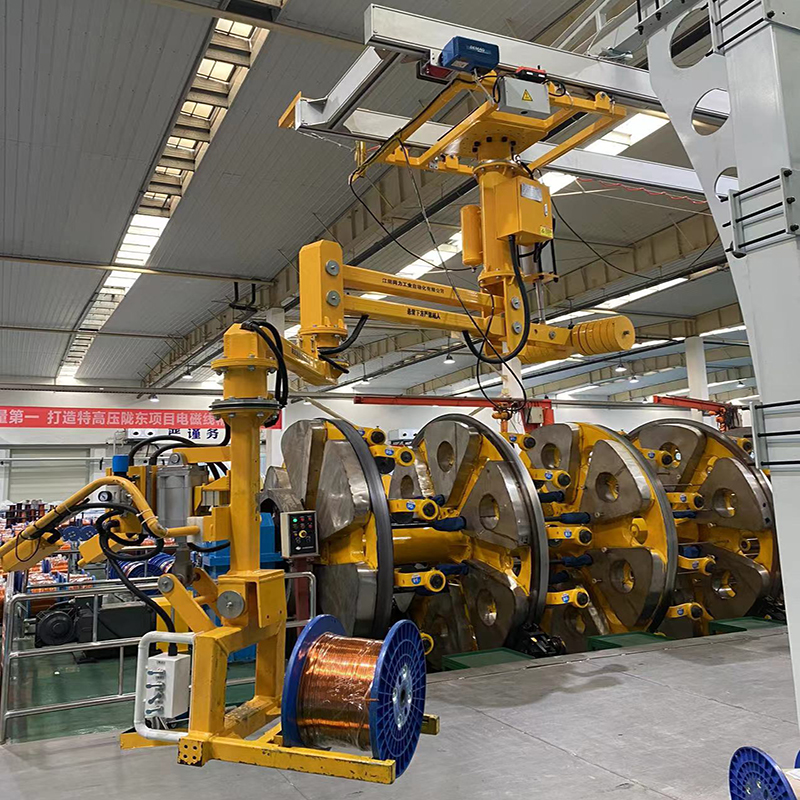
A rigid arm type manipulator is an industrial ergonomic lift assist device equipped with a solid, articulated metal arm mechanism rather than a lifting cable or chain.
Because the arm segments are mechanically linked and rigid, the system handles vertical and horizontal forces simultaneously. This structural integrity allows the manipulator to extend into tight spaces—such as reaching deep into an oven, CNC machine, or racking system—while completely neutralizing the weight of the payload for the operator.
Key Benefits of Rigid Arm Manipulators
For operations managers, safety directors, and plant engineers, investing in a rigid arm manipulator addresses three critical operational pillars: safety, precision, and efficiency.
1. Handling Off-Center Loads (Cantilevered Lifting)
Cable-based lifters require the load’s center of gravity to sit directly beneath the hoist point. If it doesn’t, the load swings unpredictably. A rigid arm type manipulator completely eliminates this issue. It allows operators to pick up parts from the side, tilt them, and manipulate them without any swinging or pendulum effects.
2. Enhanced Operator Safety and Ergonomics
Repetitive lifting, twisting, and turning lead to workplace injuries and long-term musculoskeletal disorders (MSDs). Rigid arm systems absorb 100% of the payload’s weight and torque. The operator merely guides the arm, reducing physical exertion to just a few pounds of force.
3. Absolute Precision and Control
When mating two high-tolerance parts together—such as mounting a heavy wheel onto an axle or placing a mold into a press—cables offer too much play. The rigid construction of these manipulators provides absolute control over the payload’s orientation, preventing damage to expensive components and machinery.
Common Applications Across Industries
Thanks to their versatility and rigid construction, these manipulators excel in environments where standard lifting solutions fail:
-
Automotive Assembly: Positioning heavy batteries into electric vehicles, handling engines, or installing doors and dashboards.
-
Aerospace Manufacturing: Manipulating large fuselage panels or precisely aligning jet engine components.
-
Metalworking & Machining: Loading and unloading heavy billets or dies into CNC machines or stamping presses.
-
Logistics & Packaging: Palletizing and stacking dense, awkward items like reels, drums, or large boxes.
Choosing the Right System for Your Facility
When specifying a rigid arm type manipulator, several operational variables must be evaluated to ensure maximum return on investment (ROI):
-
Weight Capacity: Precision engineering ensures that whether you are lifting 50 lbs or over 1,000 lbs, the movement remains smooth and weightless.
-
Reach and Clearance: Map out your facility’s vertical clearance and the maximum horizontal distance the arm must travel to pick and place parts.
-
End-Effectors (Tooling): The arm is only as good as its grip. Custom pneumatic clamps, vacuum suctions, or mechanical grippers must be tailored specifically to your product’s geometry.
-
Mounting Configurations: Depending on floor space and workflow layout, systems can be mounted to a fixed floor pillar, an overhead rail system, or even a mobile base for multi-station use.
For businesses looking to integrate high-performance material handling solutions into their production lines, partnering with an experienced manufacturer is vital. Explore advanced engineering options and discover tailored configurations at TL Manipulator.
Conclusion
Maximizing throughput while protecting your workforce requires moving away from outdated, manual, or imprecise lifting methods. A rigid arm type manipulator bridges the gap between manual labor and full automation, giving your operators the strength and precision needed to keep production lines running flawlessly.
Post time: Jul-20-2026