

In modern industrial facilities, the end-of-line packaging zone is frequently where production speed grinds to a halt. Manual palletizing is inherently slow, inefficient, and a primary driver of workplace musculoskeletal injuries.
An automated Handling and Palletizing System acts as the crucial bridge between production and distribution. By combining advanced robotics, smart conveying, and custom end-of-life tooling, these systems transform a notorious labor bottleneck into a continuous, high-speed, and completely hands-free operation.
Core Types of Palletizing Configurations
Depending on your facility’s footprint, throughput requirements, and product variations, palletizing systems generally fall into one of four architectural categories:
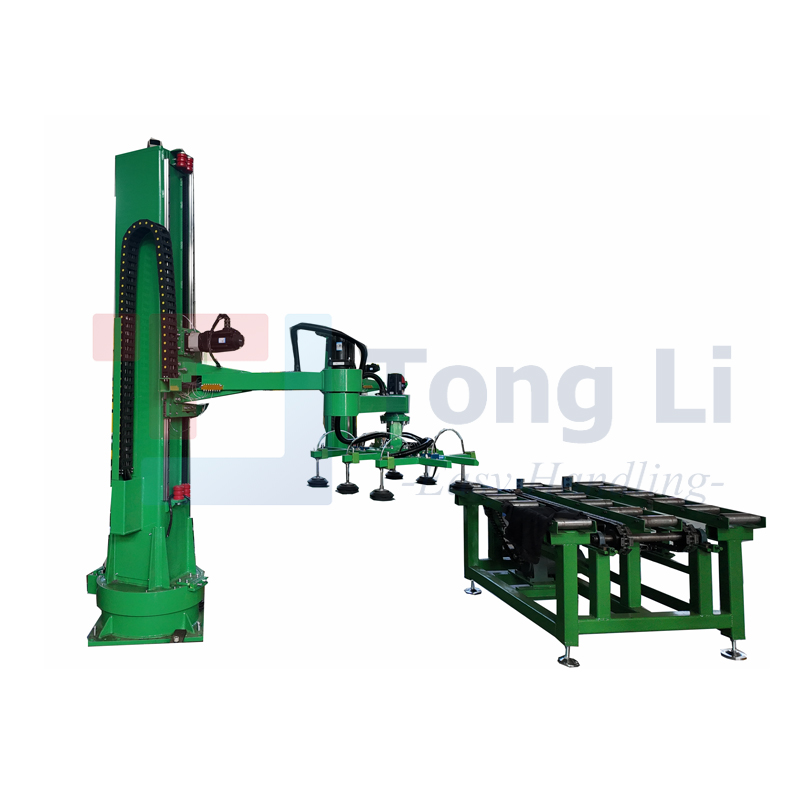
1. Articulated Robotic Palletizers
Utilizing 4-axis or 6-axis industrial robotic arms, these systems offer maximum flexibility. They can handle multiple production lines simultaneously, sort different product types onto separate pallets, and easily adapt to new packaging sizes via quick software updates.
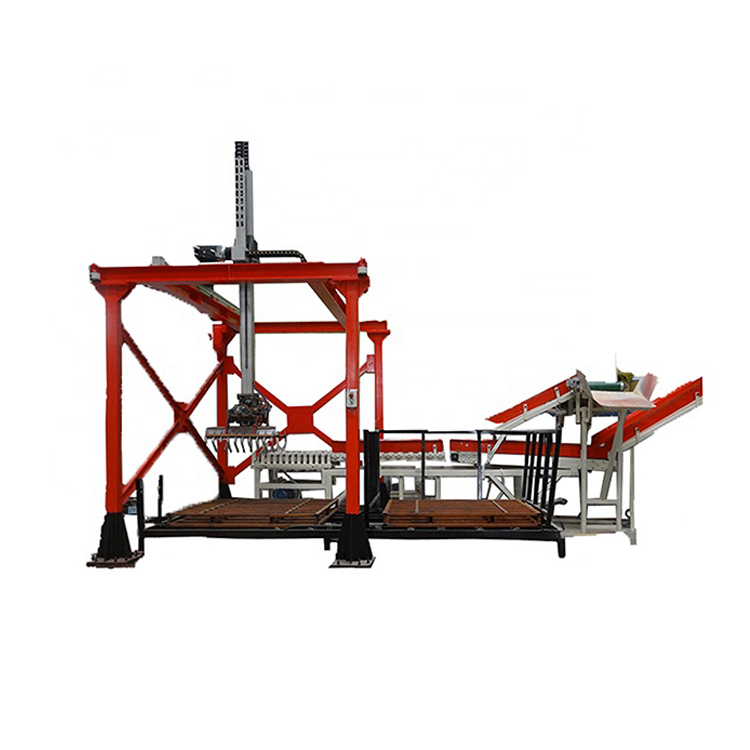
2. Gantry & Truss-Type Palletizers
For massive payloads or expansive layouts where floor space must be preserved, overhead truss-type gantry systems move along $X, Y, Z$ linear axes. Suspended entirely from overhead steel frameworks, they reach down to pick up heavy sheets, dense blocks, or oversized crates, keeping the underlying floor clear for forklift transit.
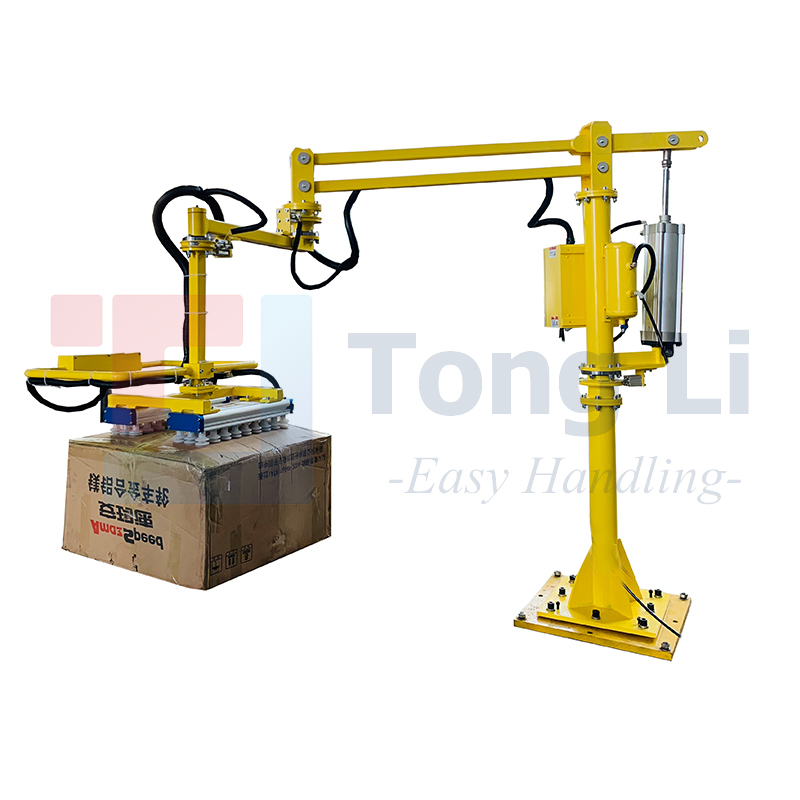
3. High-Flow Vacuum Tube Palletizers
An ideal semi-automated or hybrid solution where human oversight is still preferred. Using a single vacuum source for both gripping and lifting, these zero-gravity units allow a single worker to rapidly pick and stack heavy cartons, porous woven sacks, or chemical drums with fluid, single-handed control.
4. Conventional Layer Palletizers
Best suited for ultra-high-speed, single-product manufacturing lines (like beverage or food canning). These systems accept a continuous stream of products, arrange them into complete layers on a staging table, and push the entire layer onto the pallet at once.
Critical System Components
A fully integrated palletizing cell relies on a synchronized ecosystem of hardware and software:
-
Custom End-of-Arm Tooling (EOAT): The “hand” of the system. Depending on the product, this can feature high-vacuum suction arrays, pneumatic side-squeeze clamps, fork-style mechanical lifters, or magnetic grippers for ferrous metal components.
-
Infeed & Outfeed Conveyors: Motorized roller or belt systems that orient, space, and meter products as they arrive from the packaging lines, as well as transport completed pallets out of the cell.
-
Automatic Pallet Dispensers: Magazines that automatically drop a fresh, empty wooden or plastic pallet into the loading zone the moment a full one is discharged.
-
Safety Interlocks & Fencing: Light curtains, safety scanners, and physical fencing that instantly cut power if a human operator enters the robotic work envelope.
| System Type | Throughput Speed | Spatial Footprint | Payload Capacity | Flexibility / SKU Changes |
| Articulated Robot | Medium-High | Medium | Up to 1,000 kg | Excellent (Software based) |
| Truss/Gantry | Medium | Low (Overhead) | Massive (Up to 2,000+ kg) | Good (Linear scaling) |
| Vacuum Tube | Fast (Manual) | Compact | Up to 300 kg | Fair (Interchangeable feet) |
| Conventional Layer | Ultra-Fast | Large | High | Poor (Requires mechanical resetting) |
Transform your end-of-line bottlenecks into a competitive advantage. To explore a complete portfolio of rigid-arm manipulators, custom vacuum lifting tools, and automated non-standard material handling setups, visit Tongli Industrial.
Post time: Jun-25-2026