

In modern manufacturing industries, handling heavy and delicate roll materials has always been a critical challenge. Industries such as paper production, flexible packaging, film processing, textiles, aluminum foil manufacturing, and battery materials often require frequent movement, rotation, and positioning of large rolls. Traditional manual handling methods not only reduce production efficiency but also increase the risk of workplace injuries and material damage.
A roll handling manipulator provides an advanced solution by combining ergonomic design, precision control, and automation technology to help manufacturers achieve safer, faster, and more reliable roll transportation processes.
For companies looking to upgrade their material handling systems, professional automation equipment solutions from TL Manipulator can provide customized handling solutions designed for different production environments.
What Is a Roll Handling Manipulator?
A roll handling manipulator is an industrial lifting and positioning device specifically designed for moving cylindrical materials such as paper rolls, film rolls, textile rolls, foil rolls, and other reel-shaped products.
Unlike conventional lifting equipment, a roll handling manipulator allows operators to precisely lift, rotate, transfer, and position rolls with minimal physical effort. The equipment typically uses a customized gripping system, such as a core gripping mechanism, to securely hold the roll while protecting the material surface.
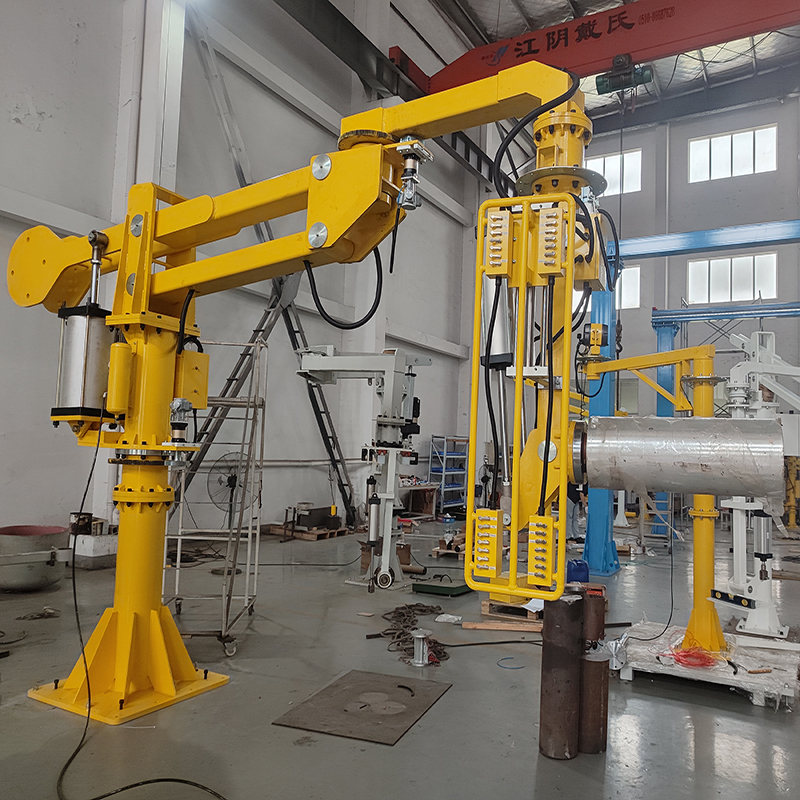
The main functions include:
- Roll lifting and lowering
- Horizontal and vertical rotation
- Machine loading and unloading
- Precise positioning
- Warehouse transfer
- Production line feeding
By integrating intelligent control systems and ergonomic operation principles, roll handling manipulators help factories improve productivity while reducing labor intensity.
Why Manufacturers Need Roll Handling Manipulators
1. Reduce Workplace Safety Risks
Heavy rolls can weigh hundreds of kilograms or more, making manual transportation dangerous. Repeated lifting and positioning operations may lead to operator fatigue, injuries, and production interruptions.
A roll handling manipulator supports the weight of the material and provides stable movement control. Operators can guide the roll safely without directly carrying heavy loads, significantly improving workplace safety.
2. Protect Valuable Roll Materials
Many roll materials have sensitive surfaces that can be easily damaged during transportation. Scratches, deformation, or improper clamping can result in expensive material waste.
Advanced roll handling systems use specially designed gripping tools to hold rolls securely while minimizing contact damage. Core gripping solutions are particularly effective because they transfer the lifting force through the roll core rather than the outer material surface.
3. Improve Production Efficiency
In manufacturing environments, every minute of downtime affects production capacity. Manual roll changing processes are often slow and require multiple workers.
A roll handling manipulator enables:
- Faster roll replacement
- Accurate machine alignment
- Reduced setup time
- Continuous production operation
This helps manufacturers increase throughput and optimize production workflows.
How Does a Roll Handling Manipulator Work?
A typical roll handling manipulator consists of several key components:
1. Manipulator Arm System
The arm structure provides flexible movement and load support. Depending on application requirements, manufacturers can choose different configurations, including fixed-column systems, rail-mounted systems, or customized automated solutions.
2. Roll Gripping Device
The gripping mechanism is the core component of the system. Different materials require different gripping methods:
- Internal core gripping for film and paper rolls
- Shaft gripping for reels
- Vacuum gripping for specific materials
- Customized clamps for special applications
The correct gripping solution ensures stable handling without damaging the product.
3. Balance and Control System
Modern manipulators use pneumatic or electric-assisted balancing systems to make heavy rolls feel lightweight during operation. This allows operators to move loads smoothly and accurately.
Main Applications of Roll Handling Manipulators
Flexible Packaging Industry
Film rolls and composite packaging materials often require careful handling because surface quality directly affects final product performance.
Roll handling manipulators help with:
- Film roll transportation
- Slitting machine loading
- Packaging line feeding
- Finished roll movement
Paper and Printing Industry
Large paper reels are difficult to move manually due to their weight and size. Manipulators provide accurate positioning for:
- Printing presses
- Paper converting equipment
- Rewinding machines
- Storage operations
Textile Manufacturing
Fabric rolls and textile materials require gentle handling to prevent deformation and contamination.
Roll manipulators improve efficiency in:
- Fabric transportation
- Loom feeding
- Warehouse organization
- Production line changeovers
New Energy Battery Materials
Battery separator films and coated materials require high-quality handling processes. Precision roll handling equipment helps maintain material integrity during transportation and production.
Key Benefits of Using a Roll Handling Manipulator
Increased Operator Productivity
One operator can complete tasks that previously required multiple workers. This improves labor efficiency and allows employees to focus on higher-value activities.
Better Handling Accuracy
Precision movement helps operators position rolls correctly on machine shafts and production equipment, reducing alignment errors.
Flexible Customization
Different factories have different roll sizes, weights, and production layouts. A professional manipulator supplier can customize:
- Load capacity
- Arm reach
- Installation method
- Gripping mechanism
- Control system
Manufacturers can explore customized industrial handling solutions through TL Manipulator.
Choosing the Right Roll Handling Manipulator
When selecting a roll handling solution, manufacturers should consider:
Roll Specifications
Important parameters include:
- Maximum roll weight
- Roll diameter
- Core diameter
- Material type
- Surface sensitivity
Production Environment
Consider:
- Available installation space
- Required movement range
- Production cycle speed
- Cleanroom or special environment requirements
Automation Requirements
Some factories need manual-assisted handling, while others require integration with automated production lines. The right system should match current production goals and future expansion plans.
The Future of Roll Handling Automation
As manufacturers continue moving toward smart factories, roll handling manipulators are becoming an important part of automated production systems.
Future developments include:
- Intelligent positioning technology
- Automated machine loading
- Digital production monitoring
- Integration with industrial robots and warehouse systems
The combination of advanced manipulators and automation technologies enables manufacturers to build safer, more efficient, and more flexible production environments.
Conclusion
A roll handling manipulator is more than a lifting device—it is a productivity improvement solution designed for modern industrial manufacturing. By improving safety, protecting valuable materials, and reducing production downtime, it helps companies achieve more efficient material handling operations.
For industries dealing with heavy rolls, reels, and cylindrical materials, investing in a customized roll handling solution can deliver long-term benefits through improved efficiency, reduced labor costs, and enhanced production reliability.
Post time: Jul-23-2026