

Modern high-throughput manufacturing facility managers face a persistent challenge: balancing operator safety with maximum operational velocity. As workpieces become heavier, assembly tolerances tighter, and cycle times shorter, traditional manual lifting or basic hoist systems create major bottlenecks and high rates of repetitive strain injuries (RSIs).
Enter the industrial assistive manipulator—an advanced material handling system designed to bridge the gap between human dexterity and mechanical lifting capacity. By creating a “zero-gravity” operating environment, industrial assist devices allow a single operator to move, tilt, rotate, and position heavy loads weighing up to 500 kg effortlessly and with millimeter-level precision.
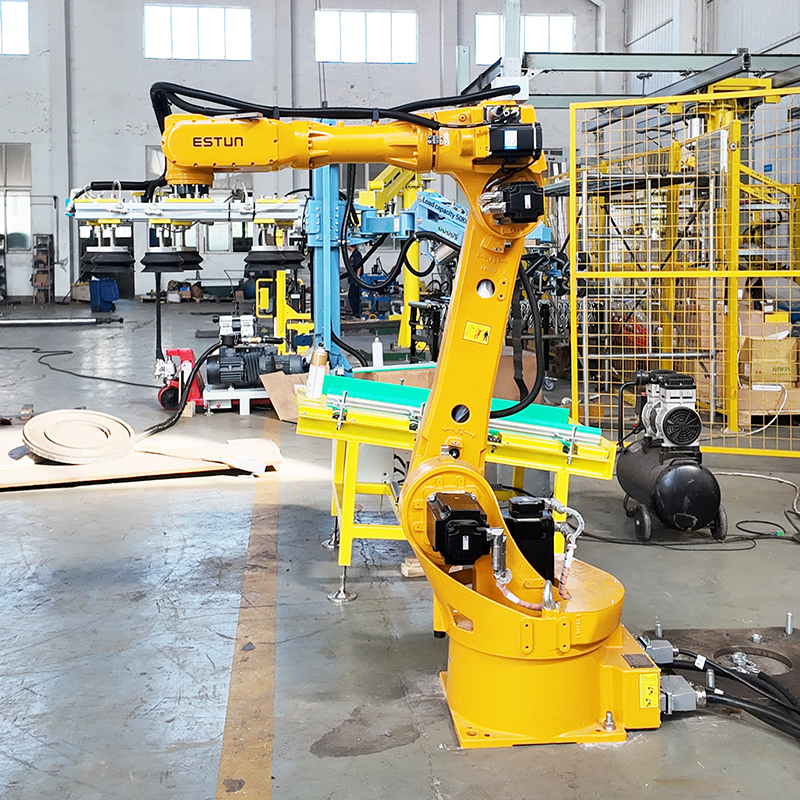
Core Operational Advantages of Assistive Manipulator Technology
Integrating power-assisted lifting systems into assembly and transfer lines provides strategic operational benefits:
1. Elimination of Workplace Ergonomic Injuries
Repetitive lifting, awkward bending, and manual positioning of heavy components—such as automotive body panels, engine blocks, or industrial radiators—are leading causes of occupational health claims. An industrial assistive manipulator counteracts payload mass, taking up to 100% of the weight off the operator’s joints and spine.
2. Enhanced Positioning Precision & Component Protection
Unlike traditional overhead cranes or electric chain hoists that exhibit pendulum sway, rigid-arm manipulators maintain precise horizontal and vertical alignment throughout movement. This rigid control prevents collisions during tight-tolerance insertions (e.g., placing windshields, mounting vehicle doors, or inserting core components into machinery).
3. Reduced Cycle Times and Single-Operator Workflows
Tasks that previously required two or three operators to balance and maneuver heavy parts can now be completed safely by a single technician using customized end-effectors.
Technical Architecture: How Zero-Gravity Assist Systems Function
Modern manipulators leverage advanced pneumatic or electro-pneumatic balancing circuits to dynamically measure load weight:
-
Pneumatic Balance Host: Automatically detects variations between unloaded and loaded states, dynamically adjusting cylinder pressure to keep the workpiece floating effortlessly in 3D space.
-
Articulated & Rigid Arm Structure: Provides smooth 360-degree rotation across multiple joints while reaching over barriers or into deep enclosures where overhead hoists cannot operate.
-
Integrated Safety Systems: Equipped with air-retention reserve tanks and self-locking safety brake mechanisms. In the event of a sudden loss of main air pressure, the manipulator holds the load securely in place rather than dropping it or allowing unmanaged movement.
Industrial assistive manipulators are deployed across diverse sectors requiring specialized handling solutions:
| Industry Sector | Typical Workpiece | Primary Manipulator Configuration | Operational Goal |
|---|---|---|---|
| Automotive Assembly | Vehicle doors, windshields, tire sets, hub assemblies | Pneumatic rigid arm with clamp/vacuum tooling | Zero-damage alignment during fast-paced assembly line movement. |
| Metal Processing | Heavy sheet metal, steel plates, structural panels | Vacuum lifter or magnetic gripper manipulator | Safe pick-and-place from shears/lasers to pallets without surface scratches. |
| Warehouse & Logistics | Boxes, drums, sacks, container cargo | Articulated air-balancer or vacuum crane | Rapid depalletizing and loading without operator fatigue. |
| Electronics & Energy | Solar panels, battery modules, radiator cores | High-precision gripper arm with multi-axis pitch adjustment | Millimeter positioning during delicate component integration. |
Post time: Aug-10-2026