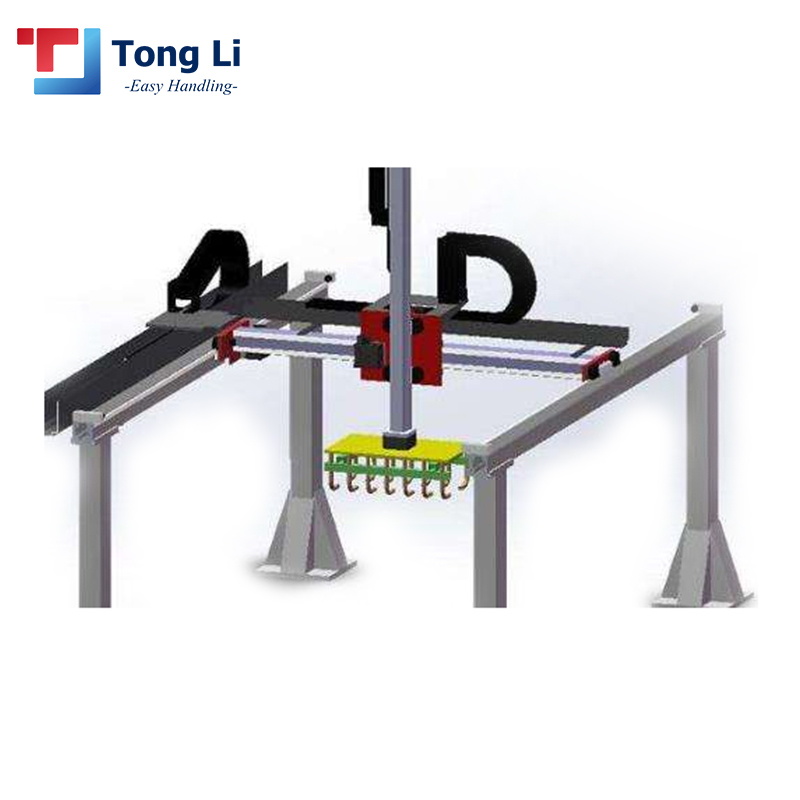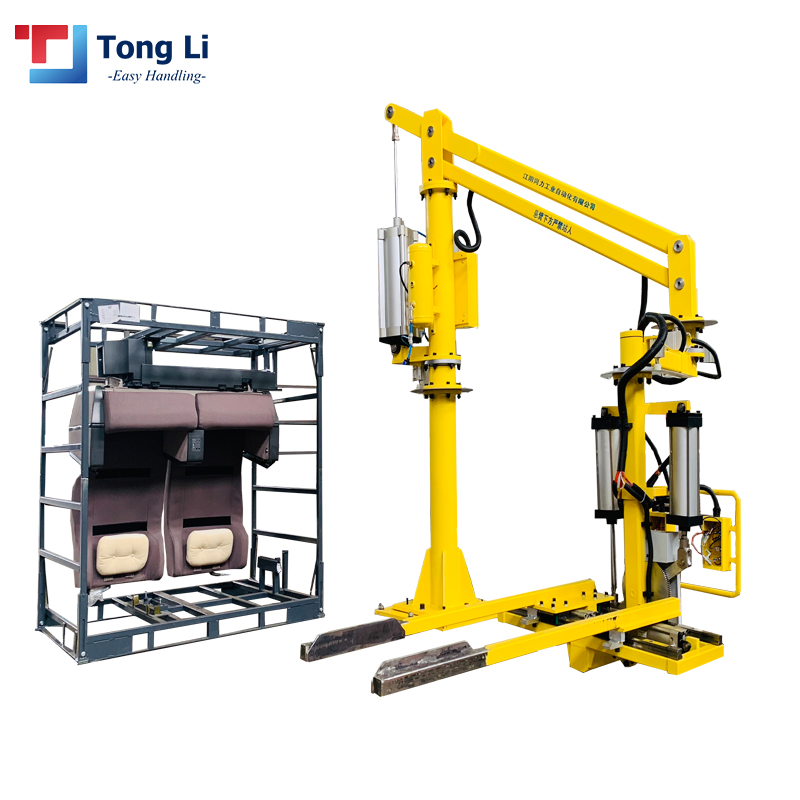


Board Lift Assist Manipulator
Common Types of Manipulators
Depending on the material and the workflow, these tools usually fall into three categories:
-
Vacuum Lifters: Use powerful suction pads to grip the surface of the board. These are the most common for non-porous materials like glass or finished wood.
-
Pneumatic Manipulators: Powered by compressed air, these utilize rigid articulated arms to provide precise movement. They are excellent for “weightless” feeling during complex maneuvers.
-
Mechanical Clamp Lifters: Use physical grippers to grab the edges of the board, often used when the surface is too porous or dirty for vacuum seals.
Key Benefits
-
Ergonomics & Safety: They eliminate the need for heavy manual lifting, significantly reducing the risk of back strain and repetitive motion injuries.
-
Increased Productivity: A single operator can often do the work that previously required two or three people, especially when handling oversized 4×8 or 4×10 sheets.
-
Precision Placement: Most manipulators allow for 90-degree or 180-degree tilting, making it easy to pick a board up horizontally from a stack and place it vertically onto a saw or wall.
-
Damage Prevention: Consistent, controlled movement reduces the likelihood of dropping and denting expensive materials.
What to Consider Before Buying
If you are looking to integrate one of these into your workspace, consider the following variables:
| Feature | Consideration |
| Weight Capacity |
Ensure the unit can handle your heaviest boards (plus a safety margin).
|
| Surface Porosity |
Will a vacuum seal hold, or do you need a mechanical clamp?
|
| Range of Motion | Do you need to rotate the board, tilt it, or just lift it? |
| Mounting Style |
Should it be mounted to the floor, a ceiling rail, or a mobile base?
|