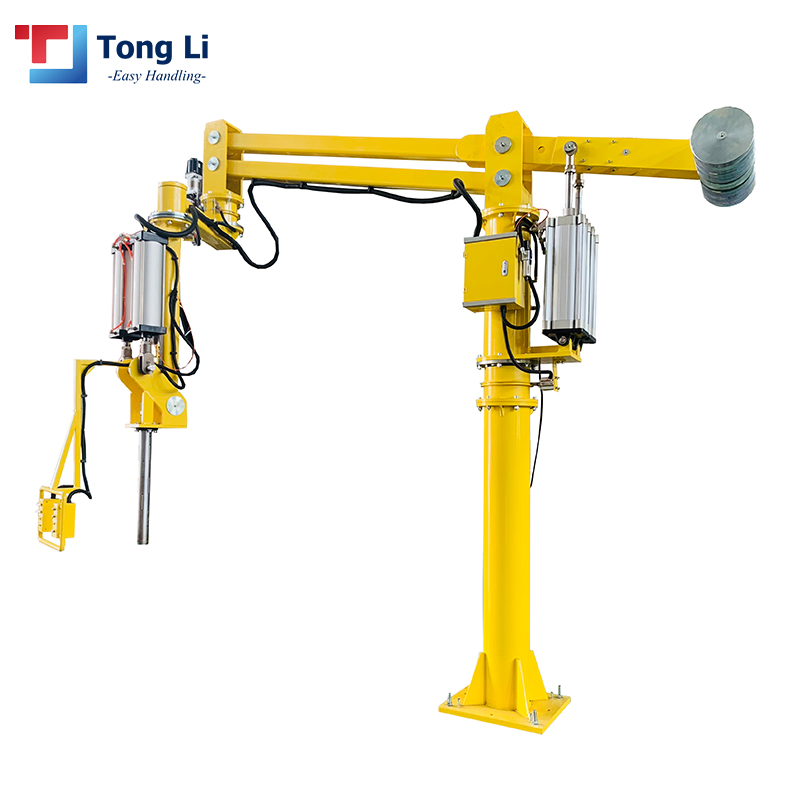


Radiator Core Handling Manipulator
Why Use a Manipulator for Radiator Cores?
The primary challenge in radiator production is the fragility-to-weight ratio. A large truck or industrial radiator core can be heavy (up to 150 kg), yet a single misplaced finger or a hard bump can ruin the airflow efficiency of the unit.
-
Damage Prevention: Standard manual handling often leads to bent fins, which requires costly manual “combing” (straightening) or results in scrapped parts.
-
Weight Neutralization: These machines use pneumatic or electronic “zero-gravity” balancing, making a 100 kg core feel like it weighs less than 1 kg to the operator.
-
Precision Alignment: Cores must be perfectly aligned with header plates or tanks. Manipulators allow for “micro-adjustments” that are difficult with traditional cranes.
Technical Components & End Effectors
The “magic” of the manipulator lies in the End Effector (the tool at the end of the arm) specifically engineered for the core’s geometry.
1. Gripping Technologies
-
Vacuum Grippers: Use large, soft suction pads that distribute pressure evenly across the face of the core. This is ideal for picking up cores from a flat building table.
-
Pneumatic Clamps with Protective Blades: These feature thin, wide “fingers” that slide into the gaps between the core and the frame or grip the side-plates. They are often lined with specialized rubber or POM (polyoxymethylene) to prevent scratching.
-
Expanding Mandrels: Used for handling radiators by their internal ports or header openings.
2. Movement Capabilities
-
180° Pitch/Rotate: Essential for taking a core from a horizontal building station and flipping it vertically for leak testing or brazing furnace loading.
-
Articulated Arms: Provide a wide range of motion, allowing the operator to reach deep into a furnace or assembly cell.
3. Control Systems
-
Intelligent Assist Devices (IADs): Modern manipulators use sensors to detect the weight of the load automatically. The operator doesn’t need to press “up” or “down” buttons; the machine simply follows the operator’s hand movement.
Key Benefits in the Factory
-
Ergonomics: Eliminates the risk of Musculoskeletal Disorders (MSDs) caused by the repetitive lifting and twisting of heavy radiator assemblies.
-
Increased Throughput: One operator can perform tasks that previously required two, and do so faster because they aren’t fighting the weight of the part.
-
Quality Consistency: By removing human variability in how the part is gripped, the “scrap rate” from handling damage is virtually eliminated.