Welcome to our websites!



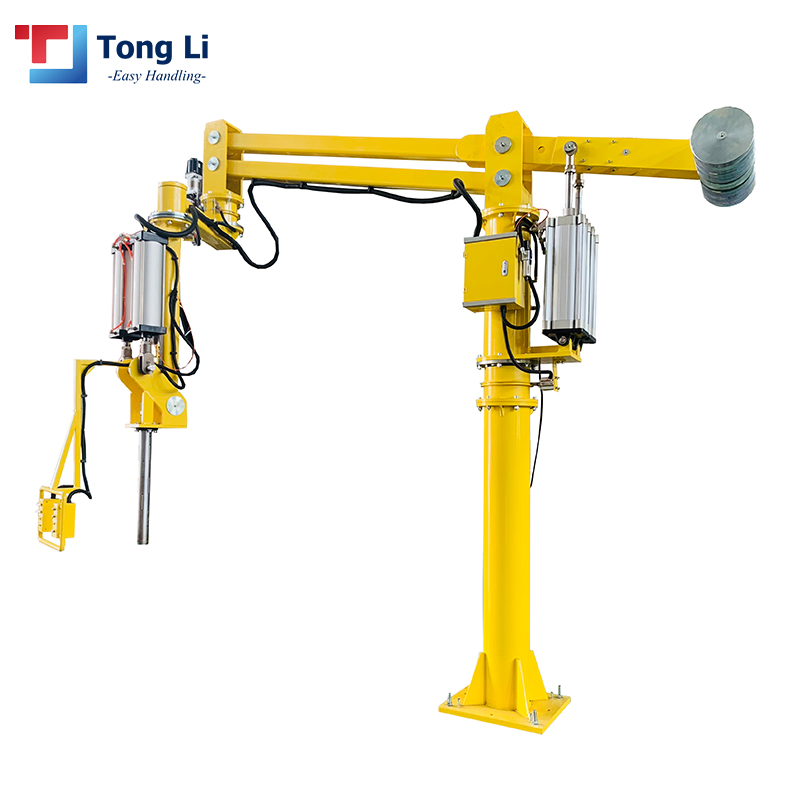
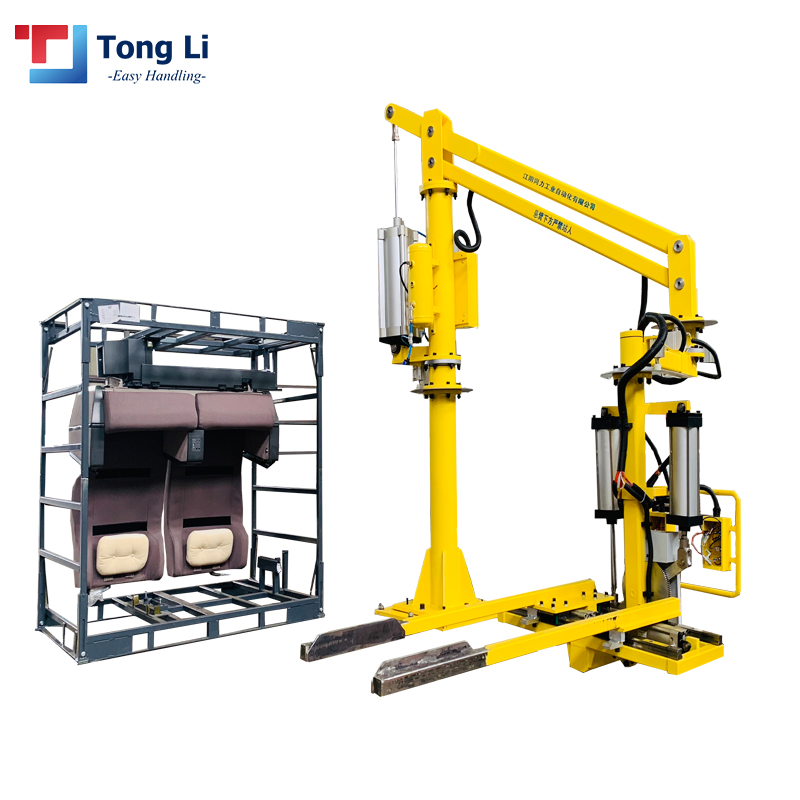
Pneumatic lift manipulator arm
These systems are built to handle “offset” loads—objects held away from the arm’s center—which would tip a standard cable hoist.
- Pneumatic Cylinder: The “muscle” that uses air pressure to counterbalance the load.
- Parallelogram Arm: A rigid steel structure that maintains the orientation of the load (keeping it level) regardless of the arm’s height.
- End Effector (Tooling): The “hand” of the machine, which can be a vacuum suction cup, mechanical gripper, or magnetic tool.
- Control Handle: Features a sensitive valve that allows the operator to regulate air pressure for lifting and lowering.
- Rotational Joints: Pivot points that allow for 360° horizontal movement.
How It Works: The “Weightless” Effect
The arm operates on the principle of pneumatic balancing. When a load is picked up, the system senses the weight (or is pre-set) and injects a precise amount of air pressure into the cylinder to oppose gravity.
- Direct Mode: The operator uses a handle to command “up” or “down.”
- Float Mode (Zero-G): Once the load is balanced, the operator can simply push or pull the object itself. The air pressure automatically maintains the “counter-weight,” allowing the operator to position parts with high finesse.
Common Industrial Applications
- Automotive: Maneuvering heavy car doors, dashboards, or engine blocks onto an assembly line.
- Logistics: Palletizing heavy bags of flour, sugar, or cement without operator fatigue.
- Glass Handling: Using vacuum grippers to move large sheets of glass or solar panels safely.
- Mechanical: Loading heavy metal billets or parts into CNC machines where precision and clearance are tight.


Write your message here and send it to us