

A vacuum suction manipulator is a lifting and positioning device that uses negative pressure (vacuum) and suction cups (or a vacuum sponge) to grip a workpiece so an operator can move it with far less effort. Most systems pair a vacuum end-effector with an arm, balancer, or rail-mounted handling structure so loads can be moved smoothly across a defined working envelope.
You’ll also hear adjacent terms:
- Vacuum manipulator: a broad label for vacuum-based gripping in a manipulator form.
- Vacuum lifting device: often used for crane-style vacuum lifters; sometimes overlaps with manipulators.
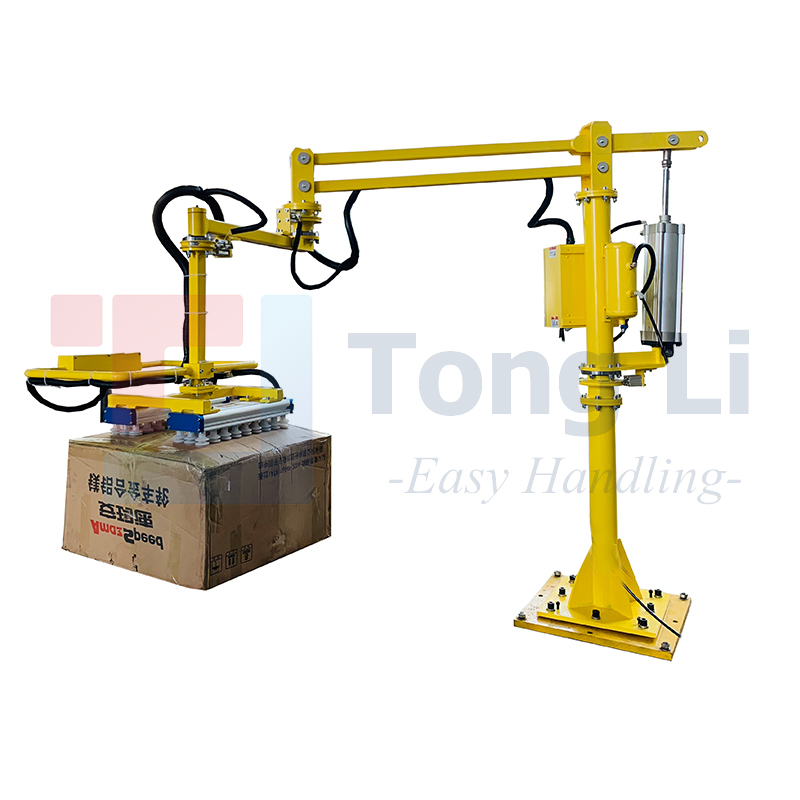
- Vacuum tube lifter: typically optimized for cartons, bags, and repetitive vertical lifts; great for logistics-style pick-and-place, but not always built for multi-axis positioning.
- Suction cup manipulator: a common buyer term for manipulators that use suction cups (rather than clamps or forks) as the gripping method.
For manufacturers evaluating automation upgrades, the key question isn’t the label—it’s whether vacuum gripping is robust enough for your workpiece and process.
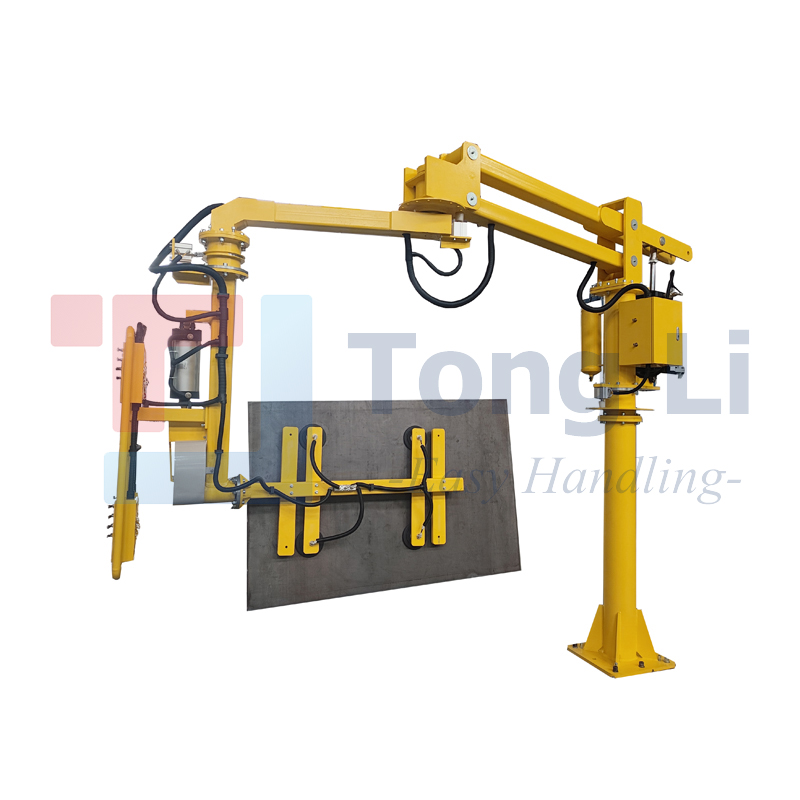
When vacuum gripping is the right choice (and when it isn’t)
Vacuum gripping is strongest when the workpiece has enough surface area and a sealable surface for suction to “hold” reliably during movement.
Best-fit workpieces
Vacuum gripping tends to work well for:
- Flat or gently contoured parts (sheet metal, panels, glass, coated boards)
- Non-damaging handling requirements (finished surfaces where clamps can leave marks)
- High repetition moves where consistent grip and fast release matter
Surfaces that require special attention
Vacuum reliability drops fast when the surface can’t seal. Typical risk cases include:
- Porous materials (some composites, foams, unfinished wood)
- Rough or irregular surfaces (deep texture, corrugation, gaps)
- Oily, dusty, or wet films that break the seal
- Highly flexible items that deform and leak around the cup edges
If you expect porous or irregular surfaces, evaluate a sponge-style vacuum head rather than standard cups. A good starting reference is a sponge-grip vacuum manipulator for porous materials that’s designed for rough and creviced workpieces.
The specifications you should confirm before approving a quote
A quote looks “complete” when it has a rated payload. A system is actually complete when it’s rated for your process.
1) Payload and real handling forces
Start with the obvious:
- Maximum part weight (include packaging, fixtures, and any lifting frame)
- Frequency and acceleration (fast moves create additional forces)
- Center of gravity and eccentric loads (vacuum is less forgiving when loads are offset)
Instead of chasing the highest capacity, focus on stability across your typical moves: lift, traverse, rotate, place.
2) Reach, working radius, and vertical stroke
For most facilities, reach is where projects fail quietly. Map:
- Pick point and place point coordinates
- Obstructions (guards, conveyors, pallet corners, machine doors)
- Required rotation (do you need wrist rotation for alignment, or only straight transfer?)
As a concrete reference for the kind of parameters to validate, review the TLManipulator vacuum suction manipulator specifications and compare them to your cell layout requirements (working radius, lifting height, operating pressure, and rotation ranges).
3) Vacuum generation method and air requirements
Most plant-floor vacuum gripping comes down to one of two approaches:
- Compressed-air vacuum generation (Venturi/ejector): simple and responsive, but air-hungry if leaks aren’t controlled.
- Vacuum pump systems: can be more efficient for continuous duty, but add maintenance and require proper filtration.
In both cases, the vacuum generator (whether an ejector unit or a pump system) and its valves/filters largely determine how quickly you can build vacuum, how cleanly you can release parts, and how sensitive the system is to leaks.
4) End effector selection: suction cup vs multi-cup vs sponge
End-effector (EOAT) choices are where you win or lose uptime:
- Cup diameter and material determine seal robustness.
- Multi-cup arrays improve redundancy (one cup losing seal doesn’t always equal a dropped load).
- Sponge heads can tolerate roughness and gaps, but need thoughtful vacuum control.
If you’re evaluating cup-based EOAT options, you can use a reference configuration like this pneumatic suction cup fixture option to align internal stakeholders on what “cup-based handling” actually looks like in hardware.
FAQ: vacuum suction manipulators for industrial use
How do I know if suction cups will hold my parts?
Test with real parts from production and include worst-case surface conditions. If the surface is porous or textured, evaluate sponge-style vacuum heads.
Are vacuum manipulators always the safest option for ergonomics?
They can dramatically reduce manual lifting strain, but safe operation depends on the full system: load security, alarm behavior, and operator training. Treat vacuum-loss behavior as a design requirement, not an afterthought.
Should I choose pneumatic, electric, or vacuum manipulation?
Choose based on the workpiece and the job:
- Vacuum is strong for flat, sealable surfaces and gentle handling.
- Pneumatic balancing is often preferred for harsh environments and heavier, offset loads.
- Electric systems can excel when precision positioning is the primary requirement.
In practice, many plants standardize on two approaches—one optimized for surface-based gripping, one for general heavy handling.
Post time: May-12-2026