

Depalletizing is the critical first step in the “Inbound-to-Production” workflow. It is the process of unloading containers, boxes, or bags from a pallet and feeding them into a production line or distribution system.
When done correctly, it sets the rhythm for the entire factory; when done poorly, it becomes a bottleneck that starves downstream machines of material.
1. The Anatomy of an Efficient Unpacking Flow
An efficient depalletizing process isn’t just about speed; it’s about the transition from a bulk state (the pallet) to a process-ready state (individual items).
Step A: Pallet Conditioning
Before the first item is moved, the system must “center” or “square” the pallet. If a stack has shifted during transit, a robot or mechanical arm may struggle to grip the product. High-efficiency systems use mechanical squeezers or 3D scanners to compensate for this.
Step B: Layer vs. Item Picking
-
Layer Depalletizing: Moves an entire layer at once (e.g., 400 cans or 20 boxes). This is the gold standard for high-speed “Mass Flow” feeding.
-
Item Picking: Moves 1-3 units at a time. This is used for mixed-SKU pallets or when the downstream process requires a specific sequence.
Step C: De-sheeting & Waste Management
Between every layer is usually a cardboard or plastic slip sheet. An efficient system integrates a vacuum tool to remove these sheets automatically without stopping the main cycle, dropping them into a dedicated recycler.
2. The “Efficiency Killers” (and how to fix them)
-
“Downed” Containers: Light items like empty plastic bottles or aluminum cans tip over easily.
-
Fix: Use vacuum-assisted sweep bars to hold the containers upright during the transition from pallet to conveyor.
-
-
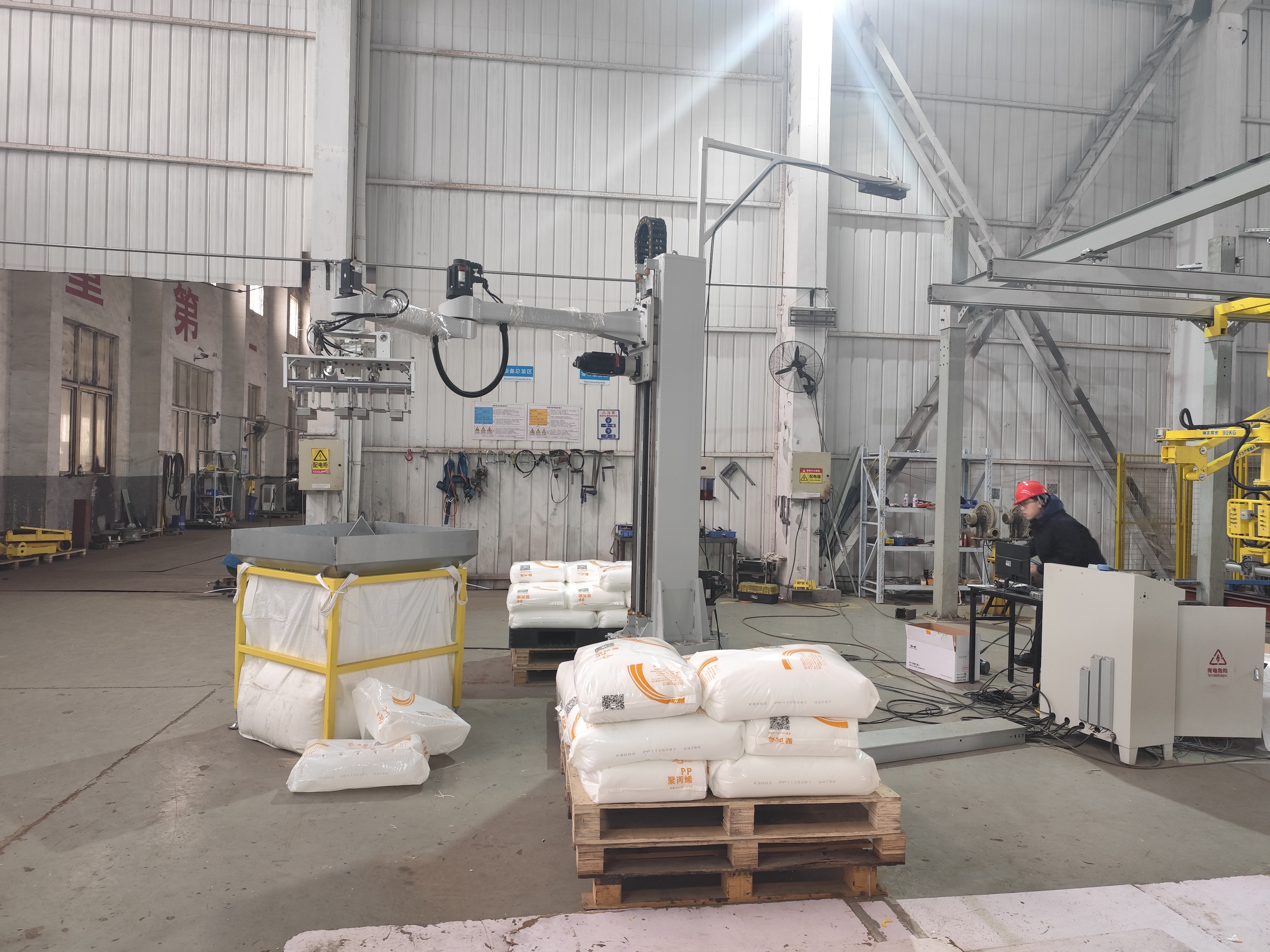
Residue in Bags: For granule or powder unpacking, leaving 1% of the material in the bag is a massive cost.
-
Fix: Integrate a high-frequency vibratory sifter in the emptying station to ensure 99.9% recovery.
-
-
Manual Pallet Handling: If a human has to drag empty pallets away, the machine stops.
-
Fix: Use an Automatic Pallet Magazine that stacks empty pallets automatically.
-
3. Summary: Why It Matters
A well-optimized depalletizing system provides three key ROI drivers:
-
Labor Reallocation: Shifts workers from dangerous, repetitive lifting to high-value machine oversight.
-
Steady State Feeding: Prevents the “feast or famine” supply to your fillers or extruders.
-
Safety: Eliminates the #1 cause of warehouse injuries (manual lifting of heavy cases and bags).
Post time: Dec-29-2025