

In today’s competitive manufacturing environment, companies are continuously looking for ways to improve production efficiency, reduce labor dependency, and maintain consistent product quality. A palletizing robot has become one of the most effective automation solutions for end-of-line packaging and material handling processes.
By replacing repetitive manual stacking operations with intelligent robotic systems, palletizing robots help manufacturers achieve faster production cycles, higher accuracy, and safer working conditions. From food and beverage to chemicals, logistics, automotive, and consumer goods, robotic palletizing technology is transforming how products are prepared for storage and shipment.
For companies seeking reliable automation equipment, advanced solutions such as an industrial palletizing robot can provide flexible and scalable options for different production requirements.
What Is a Palletizing Robot?
Unlike traditional manual palletizing, robotic systems can perform repetitive lifting, positioning, and stacking tasks continuously with high precision. They can handle various products, including cartons, bags, boxes, containers, and other packaged goods.
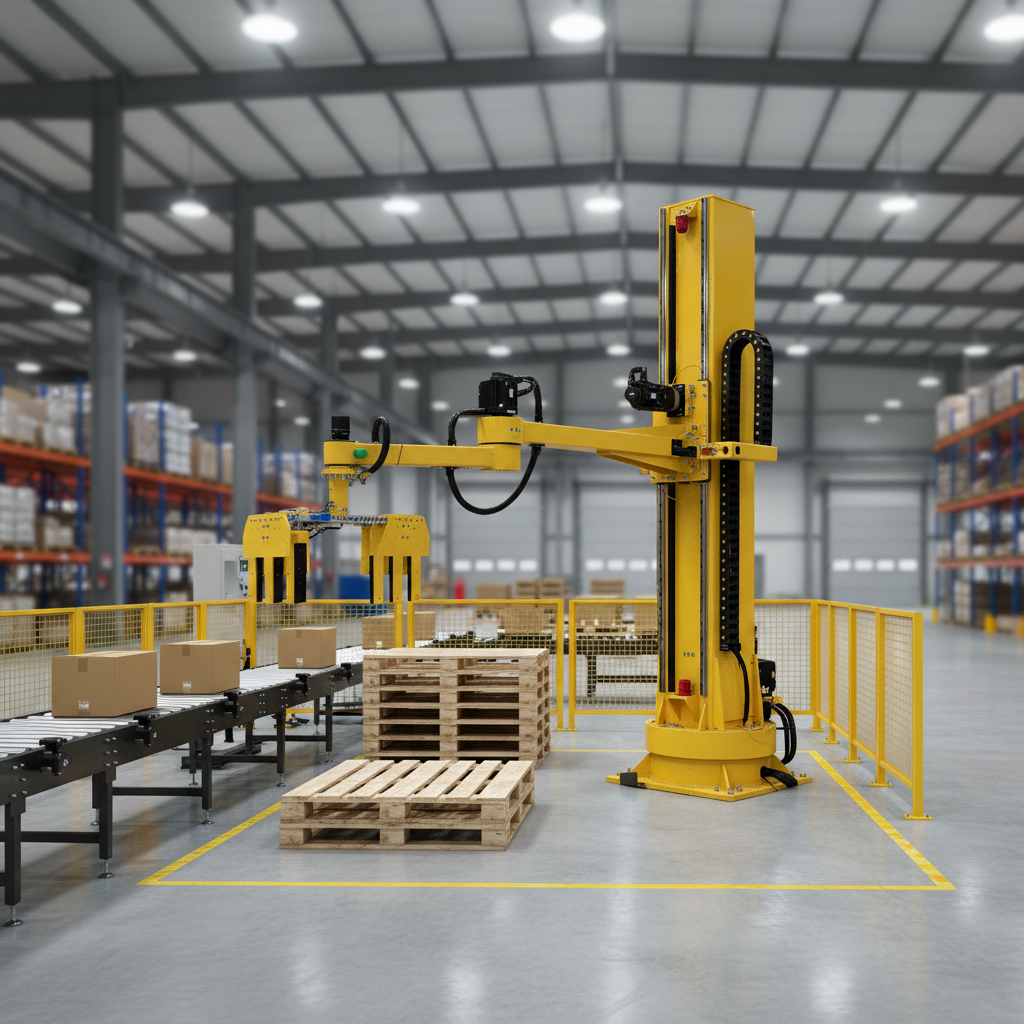
A complete robotic palletizing solution usually includes:
- Industrial robot arm or gantry structure
- Robotic gripper or vacuum suction device
- Conveyor system
- Pallet positioning equipment
- Control system
- Safety protection system
These components work together to create an automated palletizing workflow that improves production efficiency and reduces operational costs.
Why Manufacturers Choose Palletizing Robots
1. Increased Production Efficiency
Manual palletizing is often limited by worker speed, fatigue, and labor availability. A palletizing robot can operate continuously with stable performance, allowing manufacturers to maintain consistent production output.
Robotic systems can quickly complete repetitive stacking tasks while maintaining accurate pallet patterns, helping factories improve throughput and reduce bottlenecks at the end of production lines.
2. Improved Pallet Stacking Accuracy
A major advantage of robotic palletizing is precise positioning.
The robot follows programmed movements to place products in optimized patterns, ensuring:
- Stable pallet structures
- Better space utilization
- Reduced product damage
- More efficient transportation
Consistent stacking quality is especially important for industries handling large production volumes where small errors can lead to packaging issues or unstable loads.
3. Reduced Labor Costs and Workplace Risks
Palletizing often involves repetitive lifting, bending, and carrying heavy products. These tasks can create physical strain and increase workplace safety risks.
By introducing a palletizing robot, companies can reduce manual handling requirements and allow employees to focus on higher-value production tasks.
Robotic palletizing systems are widely adopted because they address physically demanding repetitive operations while maintaining reliable output.
4. Flexible Handling for Different Products
Modern palletizing robots are designed for flexibility. By changing end-of-arm tooling and programming settings, one robotic system can handle multiple product types.
Common applications include:
- Carton palletizing
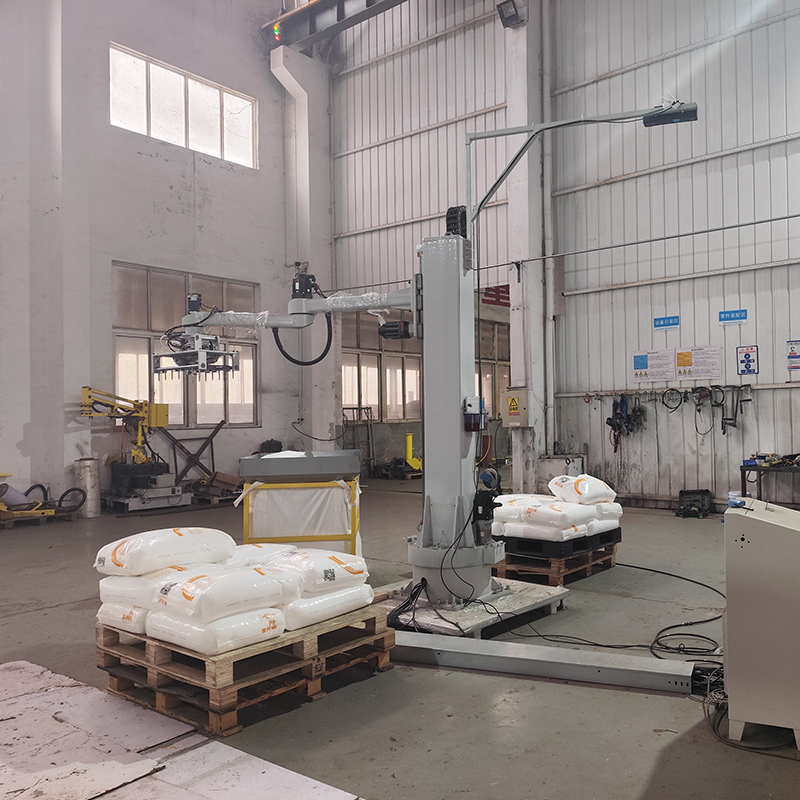
- Bag palletizing
- Box stacking
- Drum handling
- Food packaging palletizing
- Warehouse material handling
This flexibility makes palletizing robots suitable for manufacturers with multiple product lines or frequent product changes.
Types of Palletizing Robots
Robotic Arm Palletizing System
A robotic arm palletizer uses a multi-axis industrial robot to pick and place products onto pallets.
Advantages include:
- High flexibility
- Compact installation
- Easy adaptation to different products
- Suitable for complex pallet patterns
This type is commonly used in industries requiring frequent production changes.
Gantry Palletizing Robot
A gantry palletizing robot uses a Cartesian coordinate structure with linear motion axes.
Benefits include:
- Large working area
- High load capacity
- Stable operation
- Suitable for heavy products and large pallets
Gantry-based solutions are often preferred for large-scale manufacturing environments where reliability and high payload capability are required.
Vacuum Palletizing Robot
For products with smooth surfaces or lightweight packaging, vacuum gripping technology provides efficient and gentle handling.
Vacuum palletizing systems are commonly used for:
- Cartons
- Panels
- Bags
- Sheets
- Packaging materials
The correct gripping solution ensures safe product handling while improving automation performance.
Key Applications of Palletizing Robots
Food and Beverage Industry
Food manufacturers use palletizing robots for handling:
- Beverage cartons
- Food boxes
- Bottled products
- Bags and containers
Automation helps maintain hygiene standards and improves packaging line efficiency.
Chemical and Pharmaceutical Industry
Chemical and pharmaceutical companies require accurate and reliable handling solutions. Palletizing robots help manage packaged products while reducing manual contact.
Logistics and Warehousing
With increasing demand for automated warehouses, palletizing robots play an important role in improving material flow and preparing products for transportation.
Manufacturing Industry
Automotive components, electronic products, hardware parts, and industrial materials can all benefit from robotic palletizing automation.
Post time: Aug-03-2026