

In high-throughput manufacturing environments, plant managers face a continuous trade-off between maximizing floor space and maintaining efficient, safe material handling. Traditional lifting options—such as standard floor-mounted jib cranes or manual hoists—often create physical bottlenecks, restrict worker movement, and increase the risk of repetitive strain injuries.
For operations looking to scale throughput without expanding their physical footprint, the Overhead Rail Manipulator has emerged as the premier material handling solution. By shifting material handling mechanics from the floor to the ceiling network, industrial plants achieve seamless workflow integration and superior ergonomic performance.
What Is an Overhead Rail Manipulator?
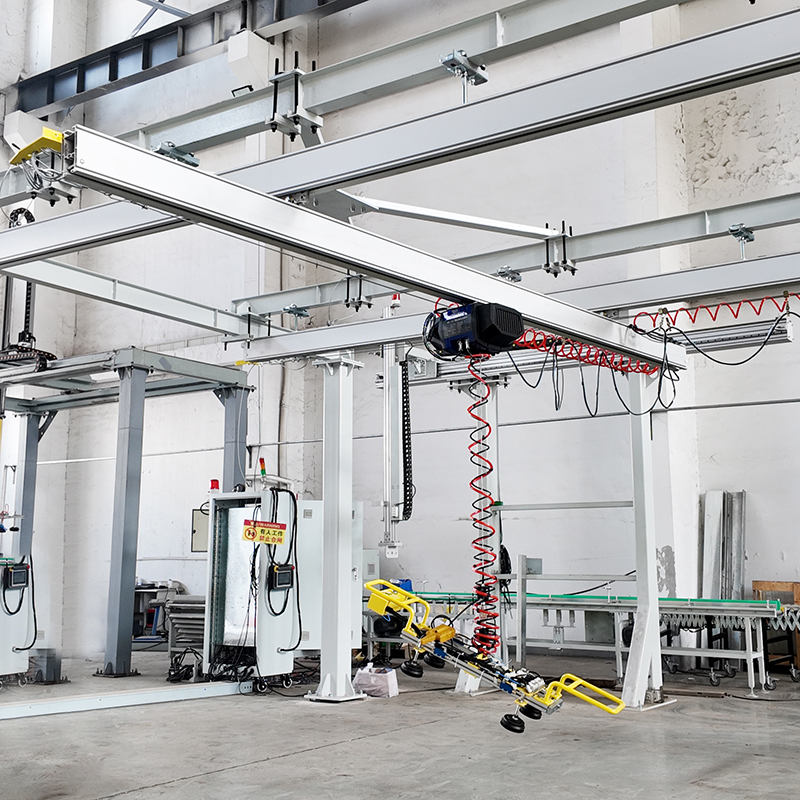
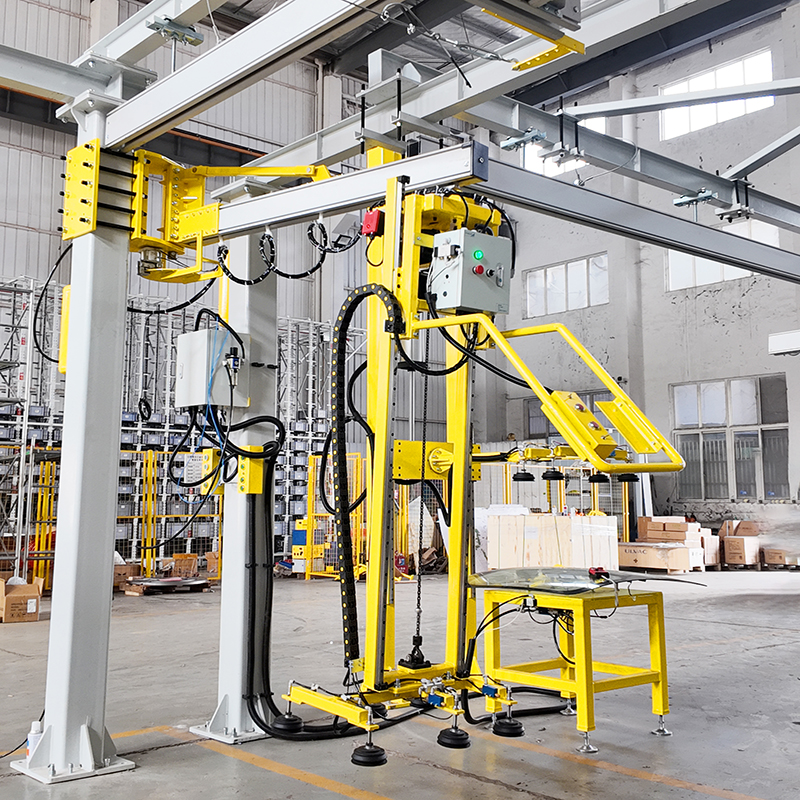
An overhead rail manipulator is a advanced lift-assist device suspended from an overhead track system—such as a monorail or an X–Y bridge layout. Unlike standard hoists that strictly offer basic vertical lifting, a rail-mounted manipulator combines multi-axis mobility with articulated pneumatic or electric arms.
Equipped with “zero-gravity” balancing technology, the system neutralizes the weight of heavy components, allowing a single operator to lift, tilt, rotate, and position loads up to 1,000 kg with minimal physical effort.
Core Operational Advantages
1. Zero Floor Footprint
Floor-mounted column manipulators and jib cranes require permanent floor anchors and a cleared radius to operate. Overhead rail systems mount directly to existing ceiling steel or freestanding overhead gantries, keeping aisles completely clear for personnel, AGVs, and forklifts.
2. Expanded Working Envelope
While floor-mounted arms are restricted to a fixed radial area, rail-mounted configurations can span entire assembly lines. Operators can pick up a component at Station A, traverse smoothly along the rail bridge, and perform high-precision installation at Station B across long distances.
3. Anti-Pendulum, High-Precision Positioning
Unlike flexible cable hoists that allow loads to swing, rigid-arm manipulators neutralize off-center momentum. This stability enables exact alignment when loading heavy castings into CNC machines, inserting car doors onto assembly frames, or stacking components into tight fixtures.
4. Advanced Ergonomics & Worker Safety
Repetitive manual lifting of loads over 20 kg is a primary cause of workplace Musculoskeletal Disorders (MSDs). Overhead manipulators absorb 99% of the strain, protecting workers, lowering compensation claims, and maintaining consistent operational speed throughout an entire shift.
Key Applications Across Industries
-
Automotive: Positioning vehicle engines, EV battery packs, dashboards, and heavy tire assemblies.
-
Metalworking & CNC Machining: Transferring steel plates, heavy dies, and shafts directly into machining centers.
-
Chemical & Processing: Safe, ATEX-rated handling and tilting of heavy drums and barrels.
-
Logistics & Packaging: Rapid palletizing and transfer of boxed goods or heavy reels across multiple conveyor stations.
Selecting the Right End-Effector Tooling
The manipulator arm provides the power, but custom-engineered End-Of-Arm Tooling (EOAT) determines functionality. Depending on the payload material, systems can be fitted with:
-
Vacuum Suction Systems: Ideal for sheet metal, glass panels, and smooth enclosures.
-
Pneumatic Jaw Clamps: Engineered for irregular solid components, shafts, and castings.
-
Expanding Mandrels: Designed to grip rolled materials or coils from the inner core.
-
Magnetic Grippers: Suited for quick pick-and-place tasks with ferrous metal parts.
Integrating tailored overhead rail systems optimizes lean manufacturing workflows while building a safer, higher-performing workforce.
Post time: Aug-31-2026