

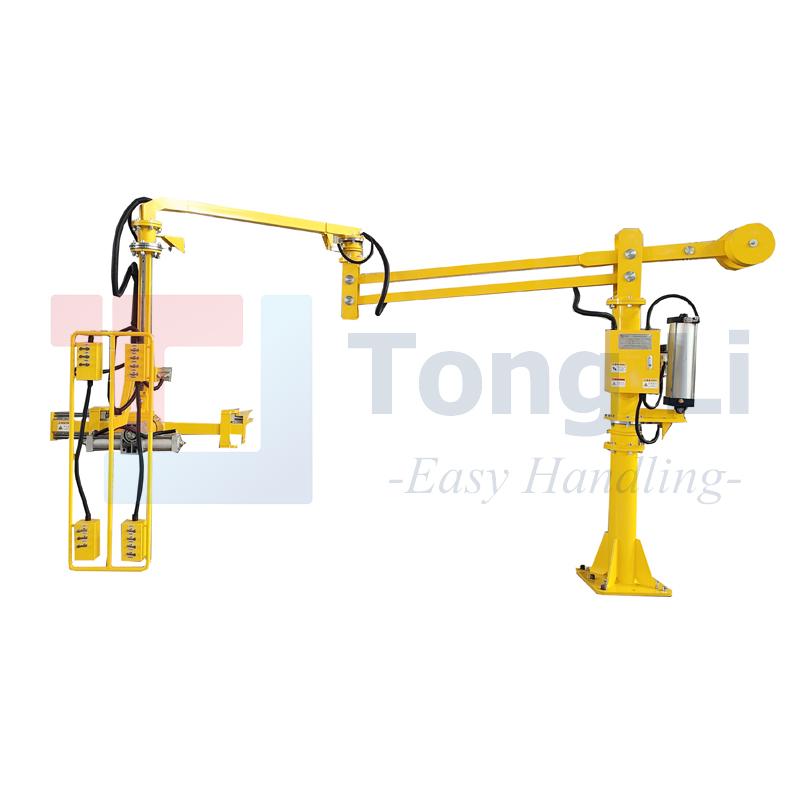
In the modern industrial landscape, the conversation is shifting from “how much can a machine lift” to “how well can a machine support the human element.” Loading and unloading manipulators are the bridge between manual grit and robotic coldness, offering a symbiotic solution that prioritizes both the person and the profit margin.
1. The Ergonomic Impact: Beyond Just “Lifting”
Ergonomics in a workshop isn’t just about comfort—it’s about injury prevention and career longevity.
-
Neutralizing the “Weight Penalty”: Traditional lifting causes micro-trauma to the spine and joints. A manipulator uses “zero-gravity” balancing, allowing a 100kg component to feel like it weighs less than 1kg.
-
Eliminating Awkward Postures: Many loading tasks require reaching into a CNC machine or under a rack. A rigid-arm manipulator allows for offset loading, keeping the operator’s body in a safe, upright “power zone.”
-
Reduced Cognitive Fatigue: When a worker isn’t struggling with physical strain, they stay mentally sharp. This leads to fewer mistakes, better quality control, and a safer environment for the whole team.
2. Boosting Productivity: The Speed of Precision
While a human might be faster than a robot for the first hour, fatigue inevitably slows them down. A manipulator maintains a consistent “cadence” throughout an 8-hour shift.
-
Minimized Cycle Times: Manipulators allow for “fluid motion” transitions. An operator can grab, tilt, rotate, and place a part in one continuous movement that a standard hoist simply cannot mimic.
-
Zero-Damage Handling: Manual handling often leads to “dings” or scratches on precision-machined parts. Pneumatic grippers and vacuum suctions ensure the part is held securely and placed gently, reducing scrap rates.
-
Single-Operator Operation: Tasks that previously required two people to “steady the load” can now be performed by a single operator with total control, effectively doubling your team’s labor efficiency.
3. Strategic Integration: Where to Start?
If you are looking to enhance your workshop’s ergonomics, start with the “High-Frequency/High-Mass” junctions:
-
Machine Tending: Loading raw billets into lathes or mills.
-
End-of-Line Palletizing: Moving finished goods from a bench to a pallet.
-
Assembly Stations: Holding heavy components (like engines or pumps) in place while the team installs fine hardware.
Post time: Feb-24-2026