

In modern manufacturing and logistics, efficient end-of-line automation is essential for improving productivity, reducing labor dependency, and maintaining consistent product quality. An industrial palletizer is a key automation solution designed to automatically arrange products onto pallets according to predefined patterns.
From cartons and bags to boxes and packaged goods, automated palletizing systems can handle repetitive stacking tasks with high speed and precision. For manufacturers looking to optimize material handling operations, an industrial palletizer provides a reliable way to improve production efficiency while reducing manual handling.
What Is an Industrial Palletizer?
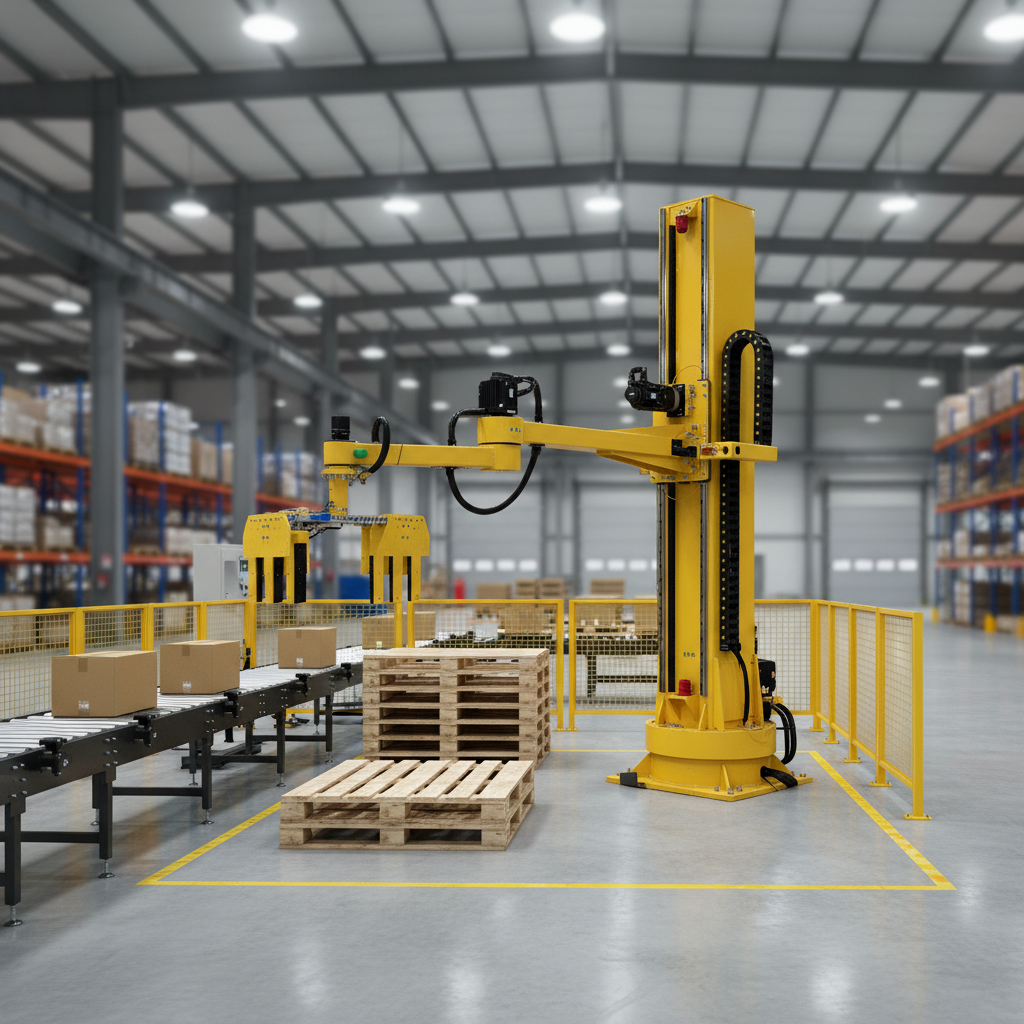
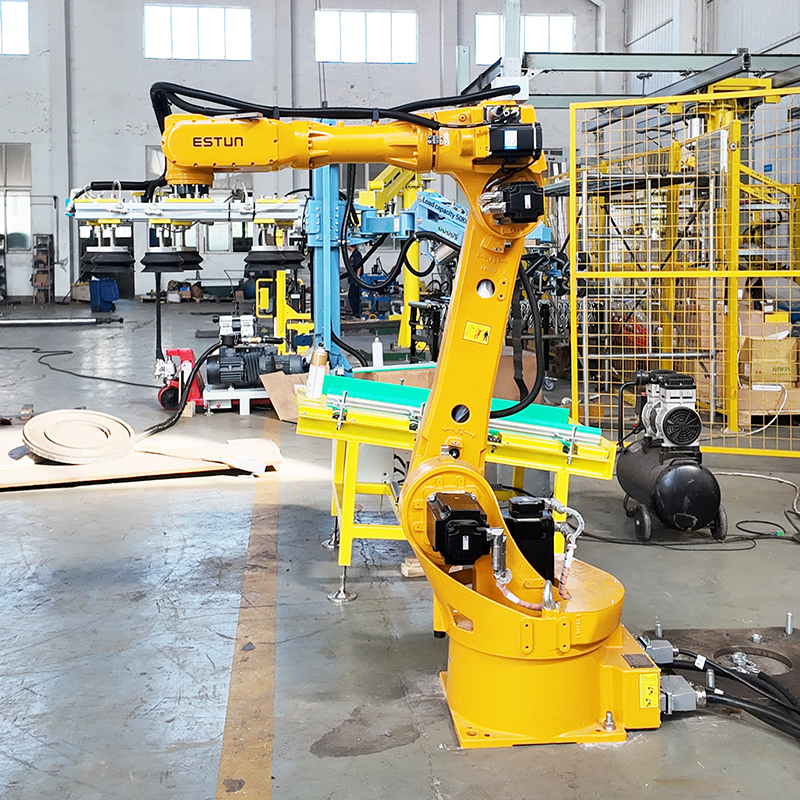
An industrial palletizer is an automated machine or robotic system used to place products onto pallets in organized stacking patterns. Instead of relying on operators to manually lift, move, and stack products, the palletizer performs these repetitive operations automatically.
A typical industrial palletizing system may include:
- Palletizing robot or gantry robot
- Product conveyor system
- Pallet conveyor
- Robotic gripper or customized end-of-arm tooling
- Pallet dispenser
- Safety fencing and sensors
- PLC control system
- Human-machine interface (HMI)
The configuration can be customized according to product dimensions, weight, production speed, pallet size, and available factory space.
How Does an Industrial Palletizer Work?
An automated palletizing process generally follows several stages:
1 Product Conveying
Products are transported from the packaging or production line to the palletizing area through conveyors. Sensors detect product position and communicate information to the control system.
2 Product Positioning
The system organizes products according to the required pallet pattern. Depending on the application, products may need to be rotated, aligned, grouped, or spaced before palletizing.
3 Automated Picking
The palletizer uses a suitable end-of-arm tool to pick products. Vacuum grippers, mechanical clamps, forks, and customized grippers can be selected according to the product characteristics.
4 Layer Formation
Products are placed onto the pallet according to a predefined stacking pattern. The system can create different layer configurations to maximize pallet stability and available space.
5 Pallet Stacking
Once one layer is completed, the palletizer continues stacking subsequent layers until the required pallet height is reached.
6 Finished Pallet Transfer
The completed pallet is transferred to the next stage, such as wrapping, warehousing, transportation, or distribution.
Key Benefits of Industrial Palletizers
Higher Production Efficiency
Manual palletizing can become a bottleneck in high-volume production environments. An industrial palletizer can continuously perform repetitive stacking operations, helping manufacturers maintain stable production rates.
Automated systems are particularly valuable for production lines that operate for extended hours or require consistent throughput.
Reduced Manual Labor
Palletizing often involves repetitive lifting, carrying, bending, and stacking. Automating these tasks can reduce the amount of manual handling required and allow employees to focus on higher-value production and supervision activities.
Consistent Palletizing Quality
Human operators may produce variations in stacking patterns, product alignment, and pallet height. An automated palletizer follows programmed palletizing patterns, helping maintain consistent product placement and pallet quality.
Flexible Pallet Patterns
Modern palletizing systems can support multiple pallet patterns. Manufacturers can configure the system for different product sizes, pallet dimensions, stacking heights, and production requirements.
This flexibility makes an industrial palletizer suitable for facilities handling multiple SKUs.
Improved Workplace Safety
Automating heavy and repetitive material handling tasks can reduce employee exposure to lifting-related risks. Properly designed systems can also incorporate safety fencing, sensors, emergency stops, and other safety features.
Industrial Palletizer Applications
Industrial palletizers are widely used across different manufacturing and packaging industries.
Carton Palletizing
Cartons and boxes are common applications for automated palletizing. A robotic or gantry palletizer can arrange cartons into stable layers for storage and transportation.
Bag Palletizing
Products packed in bags, such as chemicals, agricultural products, food ingredients, and construction materials, can be palletized automatically using customized gripping systems.
Box Palletizing
Manufacturers handling packaged consumer goods, industrial products, and components can use palletizing automation to improve end-of-line efficiency.
Food and Beverage
Food and beverage production lines often require high-speed and hygienic material handling. Automated palletizers can be integrated with packaging lines to reduce manual intervention.
Chemical and Industrial Products
Heavy bags, containers, and packaged industrial materials can benefit from automated palletizing systems designed for high payload and continuous operation.
Industrial Palletizer vs. Robotic Palletizer
Both industrial palletizers and robotic palletizers are designed to automate palletizing, but their mechanical structures and application advantages can differ.
A conventional palletizing machine may use dedicated mechanical mechanisms optimized for specific production requirements. A robotic palletizer generally provides greater flexibility in product handling and pallet patterns.
A gantry-based palletizing robot can also provide advantages for applications requiring high payload capacity, long travel distances, or multiple pallet positions.
The right solution depends on:
- Product weight
- Product dimensions
- Required cycle time
- Number of SKUs
- Pallet dimensions
- Required stacking height
- Factory layout
- Available installation space
- Required flexibility
How to Choose the Right Industrial Palletizer
Selecting an industrial palletizer requires more than simply comparing machine specifications. The system should be matched to the complete production process.
Product Characteristics
Start by identifying the product type, dimensions, weight, packaging material, and surface characteristics. These factors determine the appropriate gripping and handling method.
Production Speed
Determine the required palletizing rate, including products per minute, boxes per hour, or pallets per shift. The palletizer should provide sufficient capacity for both current and future production requirements.
Pallet Pattern
Different products may require different stacking configurations. A suitable palletizer should support the required patterns while maintaining pallet stability.
Payload Capacity
The robot or mechanical system must safely handle the maximum product and gripper weight. Payload requirements should be calculated carefully to ensure reliable operation.
Factory Layout
Available floor space, ceiling height, conveyor direction, pallet positions, and operator access all affect the final system design.
For factories with limited floor space, overhead or gantry-based palletizing solutions can provide an efficient alternative to conventional floor-mounted configurations.
Why High-Speed Palletizing Automation Matters
Production lines are becoming increasingly automated, and end-of-line palletizing is an important part of this transition. A high-speed automated palletizing system can connect packaging equipment with warehousing and logistics operations, creating a more continuous material flow.
Instead of treating palletizing as an isolated process, manufacturers can integrate the palletizer with:
- Packaging machines
- Conveyors
- Case packers
- Bag filling machines
- Pallet dispensers
- Stretch wrappers
- Warehouse systems
- Production management systems
This approach helps create a complete automated material handling solution.
Custom Industrial Palletizing Solutions
There is no single palletizer configuration suitable for every factory. Different industries have different products, production rates, pallet dimensions, and space limitations.
A customized industrial palletizing system can be designed around the customer’s production requirements. The solution may include customized grippers, conveyor layouts, pallet patterns, robot configurations, safety systems, and control interfaces.
For manufacturers requiring flexible automation, a gantry robot system can be an effective option for high-payload palletizing applications and large working areas.
Conclusion
An industrial palletizer is an important automation solution for manufacturers seeking faster, more consistent, and safer palletizing operations. By automatically handling product positioning, layer formation, and pallet stacking, palletizing automation can significantly improve end-of-line efficiency.
Whether the application involves cartons, bags, boxes, or other packaged products, the right palletizer should be selected according to product characteristics, production speed, payload, pallet pattern, and factory layout.
For companies planning to upgrade their material handling and palletizing operations, integrating an industrial palletizer with conveyors, packaging equipment, and downstream logistics systems can provide a scalable foundation for modern factory automation.
Post time: Aug-20-2026