

Choosing the right assisted lifting manipulator is like picking the right teammate for your workshop: it needs to handle the heavy lifting without getting in the way or slowing everyone down.
Here is a guide to navigating the technical specs and ergonomic needs to find your perfect match.
1. Understand Your Payload
The “what” is just as important as the “how heavy.” You need to look beyond the total weight and consider the center of gravity.
-
Weight Capacity: Calculate your maximum load, including the weight of the end-effector (the tool at the end of the arm).
-
Dimensions & Shape: Is the object fragile, hot, oily, or flexible?
-
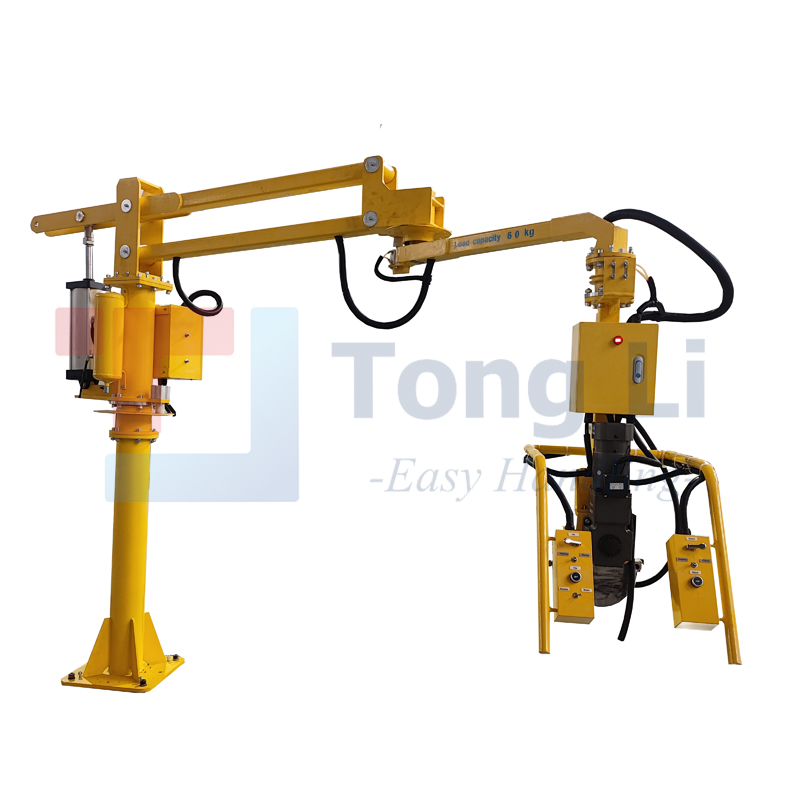
Off-Center Loads: If you need to reach into an enclosure or pick up an item off-center, you’ll need a rigid arm manipulator rather than a cable-based one to prevent swinging.
2. Evaluate the Workspace Layout
Your workshop’s physical constraints will dictate the mounting style.
| Mounting Type | Best For… |
| Floor-Mounted Pillar | Permanent workstations with 360° rotation needs. |
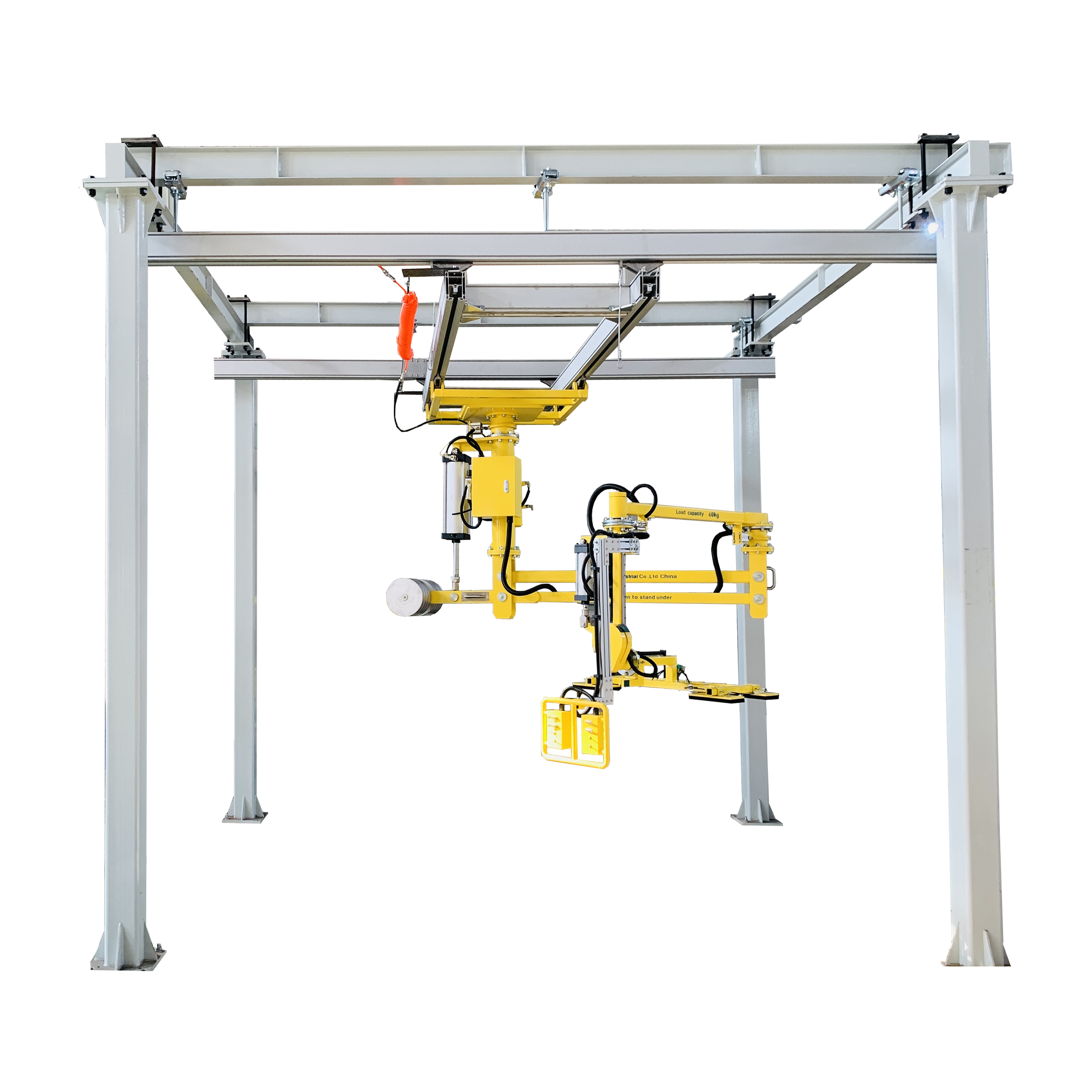
| Overhead Rail | Moving loads across long distances or large rectangular areas. |
| Ceiling Mounted | Saving floor space in cramped environments. |
| Portable Base | Tasks that happen at different stations throughout the day. |
3. Choose the Right Mechanism
There are two primary “languages” these machines speak:
Cable Manipulators (Pneumatic or Electric)
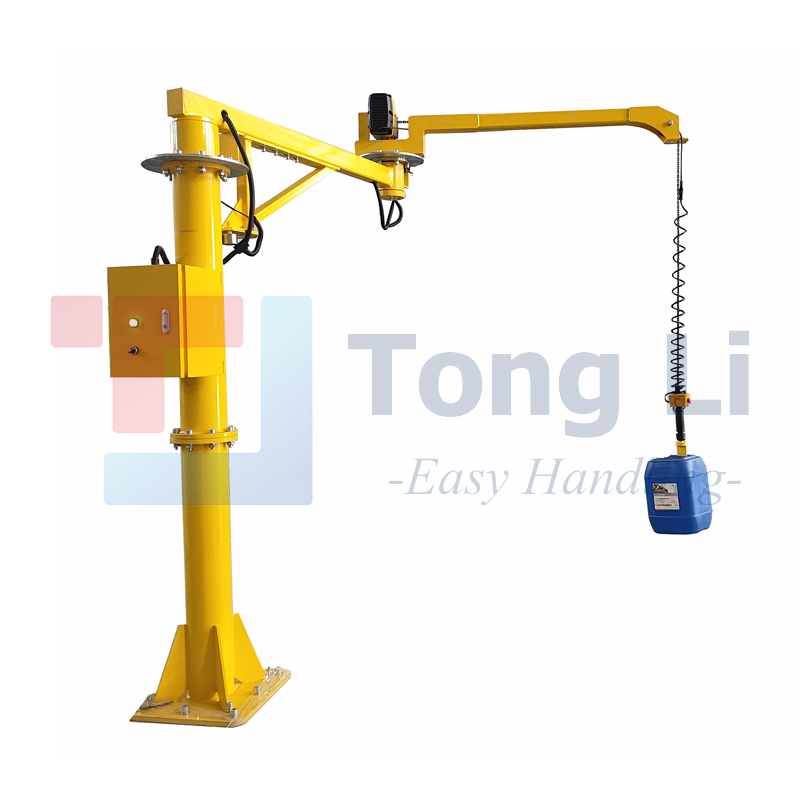
Think of these as sophisticated hoists. They use high-strength cables to lift.
-
Pros: High vertical travel, great for simple “pick and place” tasks.
-
Cons: Not great for “offset” loads; the part will swing if pushed horizontally.
Rigid Arm Manipulators
These use solid metal linkages and cylinders.
-
Pros: Allows for complex movements (tilting, rotating, flipping) and reaching into deep cavities (like an oven or a car body).
-
Cons: Larger footprint and usually a higher price point.
4. Select the End-Effector (The “Hand”)
The manipulator is only as good as its grip. Common attachments include:
-
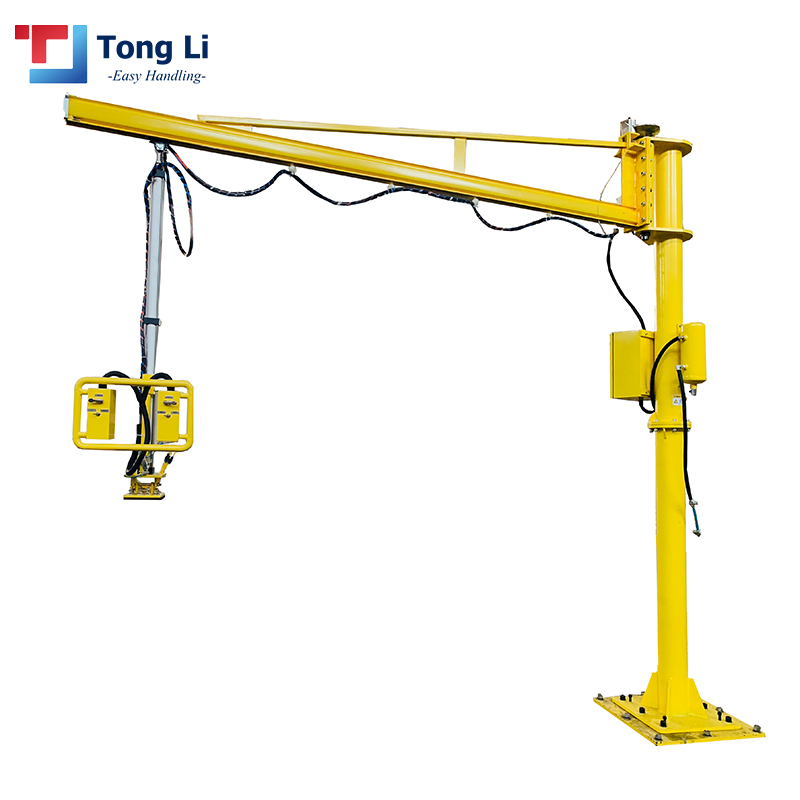
Vacuum Suction: Best for flat, non-porous surfaces (glass, sheet metal, boxes).
-
Pneumatic Grippers: For “grabbing” parts by their outer or inner diameter.
-
Magnetic Hooks: Ideal for heavy ferrous metal parts.
-
Manual Hooks/Slings: For traditional rigging tasks.
5. Ergonomics and Safety Features
A manipulator is supposed to prevent injuries, not create new ones. Ensure your choice includes:
-
Brake Systems: To prevent the arm from drifting when not in use.
-
Safety Interlocks: To prevent the gripper from releasing the load mid-air if air pressure is lost.
-
Float Mode: This allows the operator to move the load by hand with almost zero resistance, providing “weightless” precision.
Pro Tip: Always involve the machine operators in the selection process. If the controls feel clunky or the movement is unintuitive, they’ll likely go back to lifting by hand—and that’s a wasted investment.
Post time: Feb-09-2026