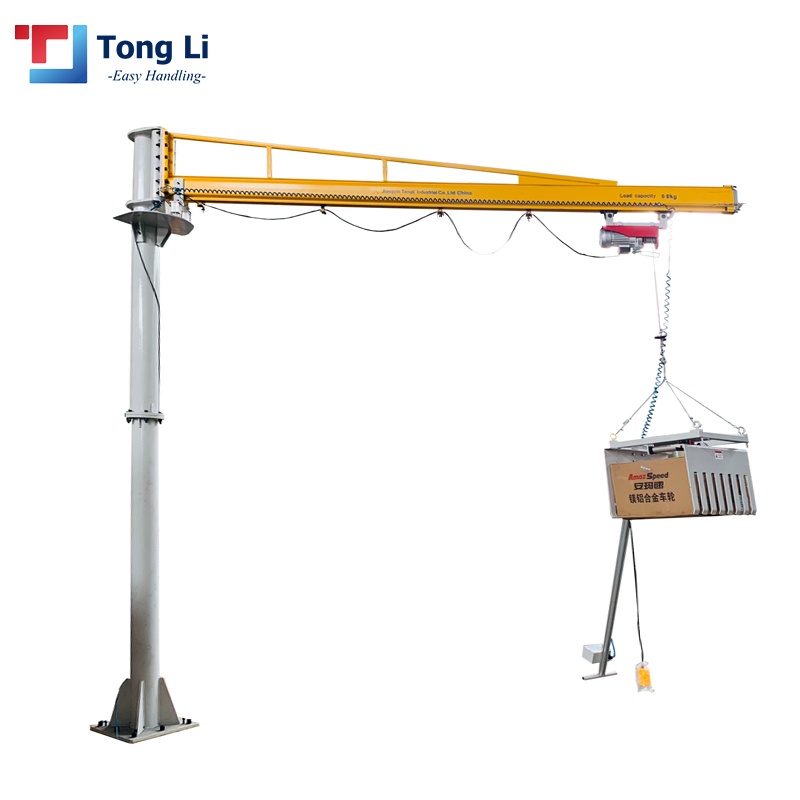


Load Manipulator for Workshop
1. Primary Types of Manipulators
The right choice depends on your workshop’s layout and the specific parts you handle.
By Mounting Style
-
Column-Mounted: Fixed to the workshop floor. Best for dedicated workstations where a 360° circular reach is sufficient.
-
Overhead Rail-Mounted: Suspended from a ceiling track or bridge. Ideal for moving loads across long assembly lines or between different work cells.
-
Mobile / Portable: Mounted on a pallet-jack base or wheels. Great for workshops that need flexibility to move the tool to different areas.
By Power Source
| Type | Best For… | Key Feature |
| Pneumatic | Harsh environments (heat, dust), ATEX/Explosion-proof zones. | Uses compressed air; “soft” natural movement. |
| Electric (Intelligent) | High precision, rapid repetitive tasks, “Smart Factory” data. | Uses servo motors; instant response with zero “bounce.” |
| Hydraulic | Extreme heavy-duty loads (over 1,000kg). | High lifting capacity but slower and requires more maintenance. |
2. Essential “End-Effectors” (The Hands)
A manipulator is only as useful as its gripping tool. Most are custom-engineered for your specific part:
-
Mechanical Grippers: Jaws or clamps for irregular, solid objects like engine blocks or shafts.
-
Vacuum Suction: Best for flat, non-porous surfaces like glass sheets, metal panels, or cardboard boxes.
-
Expanding Mandrels: Inserted into the center of rolls, coils, or pipes to lift from the inside.
-
Magnets: Used for quick handling of ferrous metal parts.
3. Why Add One to Your Workshop?
If your team is frequently lifting items over 20kg or performing repetitive “pick and place” tasks, a manipulator provides:
-
Zero-Gravity Sensing: The machine counterbalances the weight. If you lift a 100kg engine, it feels like it weighs less than 1kg to your hand.
-
Off-Center Loading: Unlike a hoist, a rigid-arm manipulator can pick up a load that isn’t directly underneath it (e.g., reaching inside an oven or a CNC machine).
-
Injury Prevention: Drastically reduces Musculoskeletal Disorders (MSDs) and worker fatigue.