

Hub Assembly Manipulator
1. Typical End-Effector (Gripper) Types
The “hand” of the manipulator is the most critical part. For wheel hubs, two designs are standard:
a. Internal Expansion:
How it works: A pneumatic mandrel inserts into the center bore of the hub. When activated, segments expand outward to grip the internal diameter.Advantage: Leaves the outer flange completely clear for assembly onto the vehicle.
b. External Clamping:
How it works: Pneumatic jaws with contoured pads (often lined with Linatex or rubber) clamp onto the outer diameter of the hub or the wheel studs.
Advantage: Very secure for high-speed transport and can handle hubs of slightly different sizes.
2. Key Technical Features
To ensure the hub is not just “lifted” but successfully “assembled,” these systems include:
Float Mode: Once the hub is near the axle, the manipulator enters a “float” state where the operator can manually wiggle the part a few millimeters in any direction to align the splines or bolt holes without fighting the machine’s motor.
90° Power Tilt/Rotate: Allows the operator to pick up a hub from a horizontal pallet and rotate it 90° to a vertical orientation for installation on the vehicle side.
Mid-Air Release Protection: A safety circuit that detects if the part is “under load” (hanging in the air). The “Release” button is disabled until the sensor detects the part has been seated or placed on a solid surface.
Ergonomic “D-Handle” Controls: Handles often include integrated thumb switches for “Grip/Release” and “Up/Down” so the operator never has to let go of the tool to adjust the height.
3. Integration Options
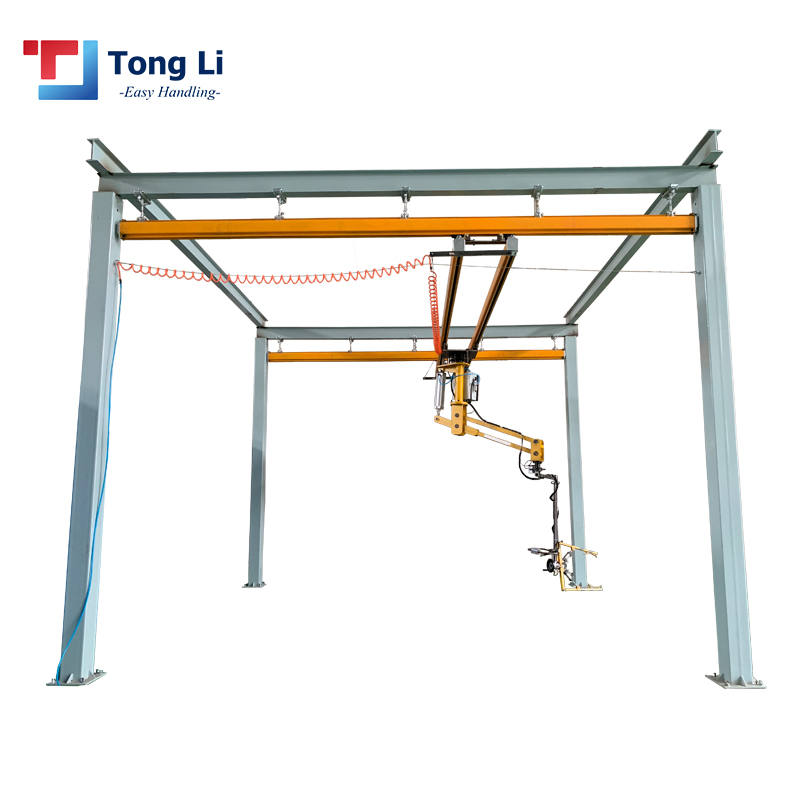
A Hub Assembly Manipulator is usually mounted in one of three ways:
Overhead Bridge Crane: For covering large assembly line areas.
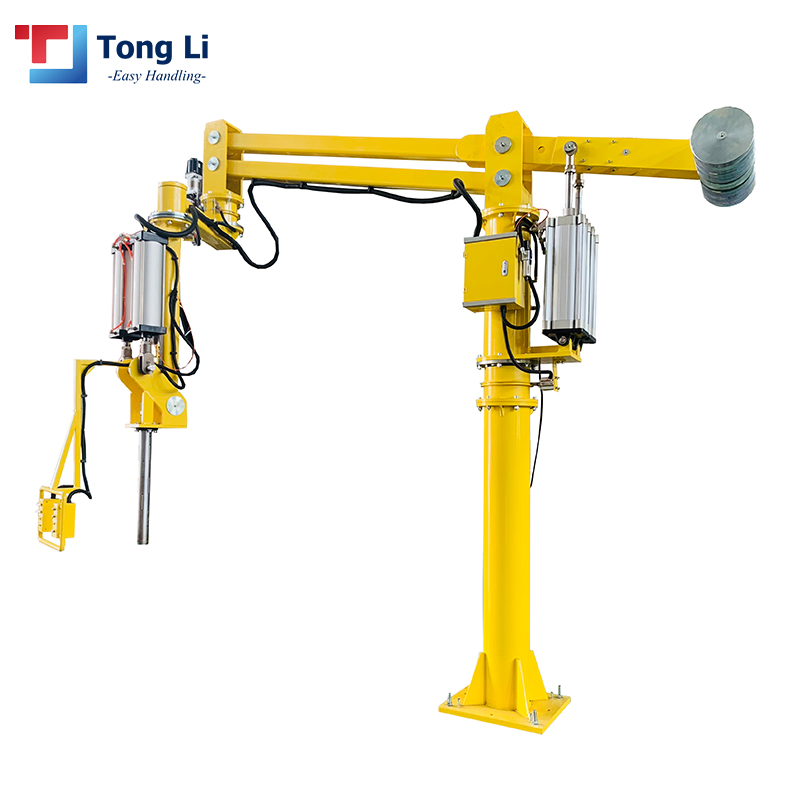
Articulating Jib Arm: A “folding” arm that provides a wide range of motion in a compact footprint (ideal for tight work cells).
Floor-Mounted Pillar: A standalone station often used in sub-assembly (e.g., attaching the hub to the steering knuckle before it goes to the main line)