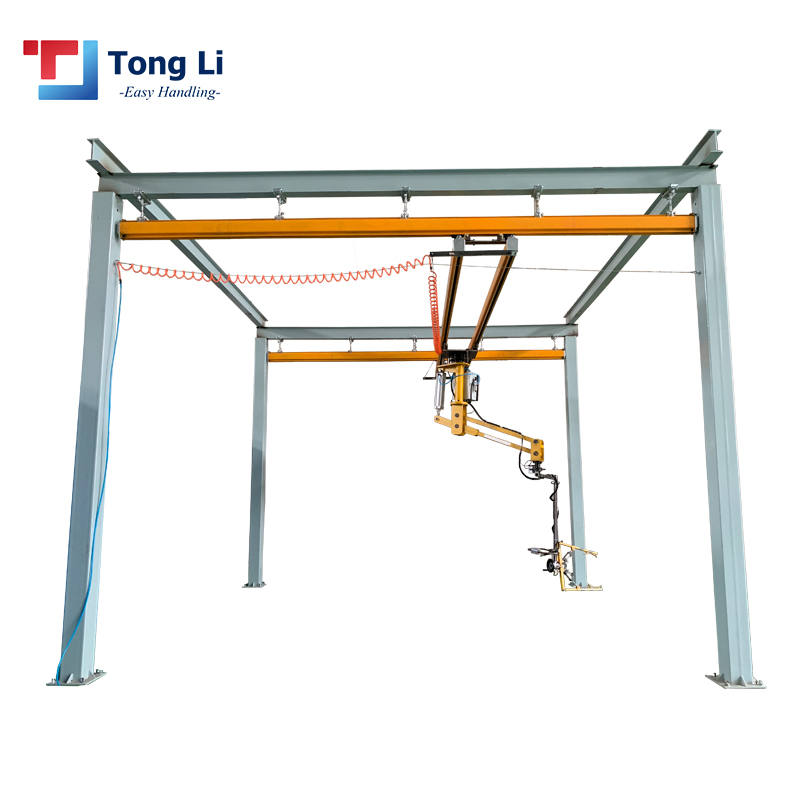


Column-Mounted Vacuum Lifting Manipulator for Industrial Material Handling
Key Features of the Column-Mounted Vacuum Lifting Manipulator
1. Stable Column-Mounted Structure
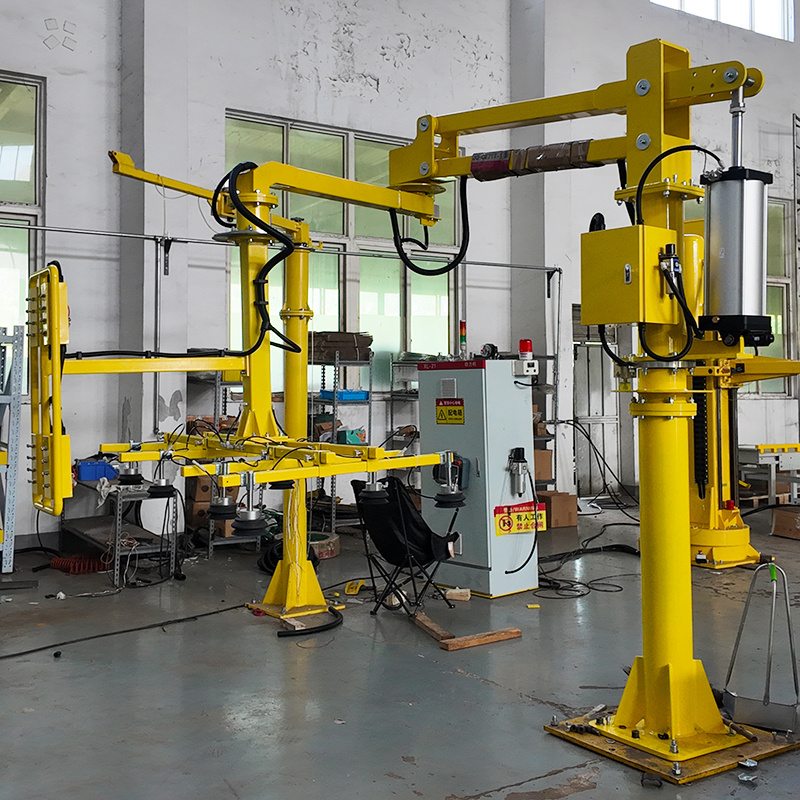
The column-mounted design provides a dedicated support structure for the lifting arm and associated handling mechanisms. It can be arranged to suit specific production layouts and designated material handling zones.
2. Articulated Lifting Arm
The articulated arm allows the manipulator to be configured for lifting and positioning movements within its designed operating range. Its structure can be adapted to the required handling path and workspace conditions.
3. Vacuum-Based Gripping System
The vacuum gripping assembly is designed to engage compatible workpieces through suction. The number and arrangement of suction cups can be selected according to the material surface, dimensions, weight distribution, and handling requirements.
Before selecting a vacuum lifting configuration, the workpiece surface, sealing conditions, load characteristics, and required safety factors should be carefully evaluated.
4. Application-Specific Configuration
Industrial lifting manipulators can be configured with different arm arrangements, mounting options, and end-of-arm tooling. This makes it possible to develop a handling solution for specific material transfer and positioning tasks.
5. Improved Operator Ergonomics
By assisting with repetitive lifting and movement operations, the manipulator can help reduce the physical effort required from operators. The final ergonomic benefits depend on the actual application, operating procedures, and equipment configuration.
Technical Specifications
The following specifications should be confirmed according to the selected model and customized design.
| Parameter | Specification |
|---|---|
| Equipment Type | Column-Mounted Lifting Manipulator |
| Gripping Method | Vacuum Gripper |
| Mounting Type | Floor-Mounted Column |
| Arm Configuration | Articulated Lifting Arm |
| Rated Load Capacity | 200 kg |
| Working Radius | 1500 mm |
| Lifting Stroke | 2000 mm |
| Vacuum Supply Requirements | 0.5–0.7 MPa |
| Suction Cup Configuration | Application-specific |
| Control Method | Pneumatic |
| Installation Requirements | Based on the project design |
| Customization | Available according to actual engineering capabilities |
For an accurate equipment selection, the rated load, working envelope, end effector, and utility requirements should be confirmed during the technical evaluation.
How Does a Vacuum Lifting Manipulator Work?
A vacuum lifting manipulator uses a vacuum gripping system to engage suitable workpieces and a mechanical arm to support controlled lifting and positioning movements.
The general operating process includes the following steps:
Step 1: Workpiece Engagement
The vacuum gripping tool is positioned over the target workpiece. The suction cups are placed on a suitable surface according to the product design and handling requirements.
Step 2: Vacuum Generation
The vacuum system generates the required suction force. The gripping system must be designed for the workpiece’s weight, surface properties, and operating conditions.
Step 3: Load Lifting
Once the load is securely engaged and the required safety conditions are satisfied, the manipulator supports the lifting movement.
Step 4: Material Transfer
The operator guides the lifting arm along the designated movement path to transfer the workpiece to the required location.
Step 5: Positioning and Release
The workpiece is positioned at the destination, and the vacuum gripping system releases the load according to the designed operating procedure.
The actual working principle and control sequence depend on the selected vacuum system, mechanical structure, and application-specific design.
Industrial Applications
The column-mounted vacuum lifting manipulator can be considered for a variety of industrial material handling tasks when the workpiece is compatible with vacuum gripping.
Sheet Metal and Panel Handling
Vacuum lifting equipment can be configured to assist with moving suitable metal sheets, panels, or other flat workpieces. The gripping system must be selected according to the surface condition, dimensions, and load distribution.
Glass and Flat Surface Handling
For compatible glass or flat-panel applications, vacuum gripping systems can support lifting and positioning operations. The suction cup arrangement and vacuum safety design must be matched to the specific material and working conditions.
Machine Loading and Unloading
A customized manipulator may assist with transferring suitable workpieces between designated locations and production equipment. The required reach, clearance, tooling, and movement sequence should be assessed before installation.
Material Transfer Between Workstations
The manipulator can be designed to support repetitive transfer tasks between workstations, storage areas, or production processes within its operating envelope.
Packaging and Manufacturing Operations
For suitable products and packaging materials, a vacuum lifting configuration may assist with repetitive lifting and positioning tasks in manufacturing and packaging environments.
Customization Options
Every industrial handling application has different requirements. TL Manipulator can evaluate suitable equipment configurations based on the customer’s operating conditions and project specifications.
Potential customization considerations include:
- Load Capacity: Design requirements based on the workpiece weight and load distribution.
- Arm Reach: Working radius and movement envelope for the target application.
- Vacuum Tooling: Suction cup type, quantity, and arrangement for compatible materials.
- Mounting Configuration: Column position and installation arrangement based on the workspace.
- Handling Path: Required lifting height, transfer distance, and positioning locations.
- Control System: Handling controls and operational functions based on the selected design.
- Safety Features: Appropriate load retention, vacuum monitoring, and other safety provisions according to the risk assessment and applicable requirements.
Why Choose a Customized Industrial Lifting Manipulator?
Selecting the right material handling equipment requires more than evaluating lifting capacity alone. The workpiece, handling frequency, workspace, gripping method, and required operator movements all influence the equipment design.
A customized lifting manipulator can help manufacturers address specific material handling challenges while making better use of available production space. The right configuration can also support more consistent handling procedures and improve operator interaction with repetitive lifting tasks.
TL Manipulator focuses on application-oriented material handling solutions, helping customers evaluate equipment configurations that align with their manufacturing requirements.
Frequently Asked Questions
What is a column-mounted vacuum lifting manipulator?
A column-mounted vacuum lifting manipulator is an industrial lifting device that combines a fixed support column, a mechanical lifting arm, and a vacuum-based gripping system to assist with handling compatible workpieces.
What materials can a vacuum lifting manipulator handle?
It may be suitable for compatible materials with appropriate surfaces, such as certain metal sheets, glass panels, or other flat workpieces. Suitability depends on the material’s surface, weight, dimensions, and gripping conditions.
Can the manipulator be customized?
The manipulator’s arm configuration, mounting arrangement, and end-of-arm tooling may be customized according to the manufacturer’s engineering capabilities and the requirements of the application.
How do I select the right vacuum lifting manipulator?
Consider the workpiece weight, dimensions, surface characteristics, center of gravity, lifting height, working radius, handling frequency, and installation environment. Providing product drawings or application videos can help with technical evaluation.
What information is needed to request a quotation?
Customers should provide the workpiece weight and dimensions, photos or drawings, pickup and drop-off locations, required movement path, workspace layout, and any specific handling requirements.
Request a Customized Vacuum Lifting Solution
Looking for a reliable solution for repetitive lifting and material transfer tasks?
Contact TL Manipulator to discuss your application requirements and explore a suitable industrial lifting manipulator configuration.
Please share the following information with our engineering team:
- Workpiece photos or drawings
- Material weight and dimensions
- Required lifting height and working radius
- Pickup and drop-off locations
- Current handling process
- Installation space and other technical requirements
Our team can evaluate your application and discuss a suitable lifting and handling solution based on your project needs.
Request a Quote for Your Vacuum Lifting Manipulator Today.