

Cantilever Pneumatic Manipulator
1.How It Works
The manipulator operates on the principle of pneumatic counterbalancing.
The Power Source: It uses compressed air to actuate a pneumatic cylinder.
Weightless State: A specialized control valve monitors the pressure needed to hold a specific load. Once “balanced,” the arm remains at any height the operator places it without drifting.
Manual Guidance: Because the load is balanced, the operator can manually push, pull, or rotate the arm into position with high precision.
2. Key Components
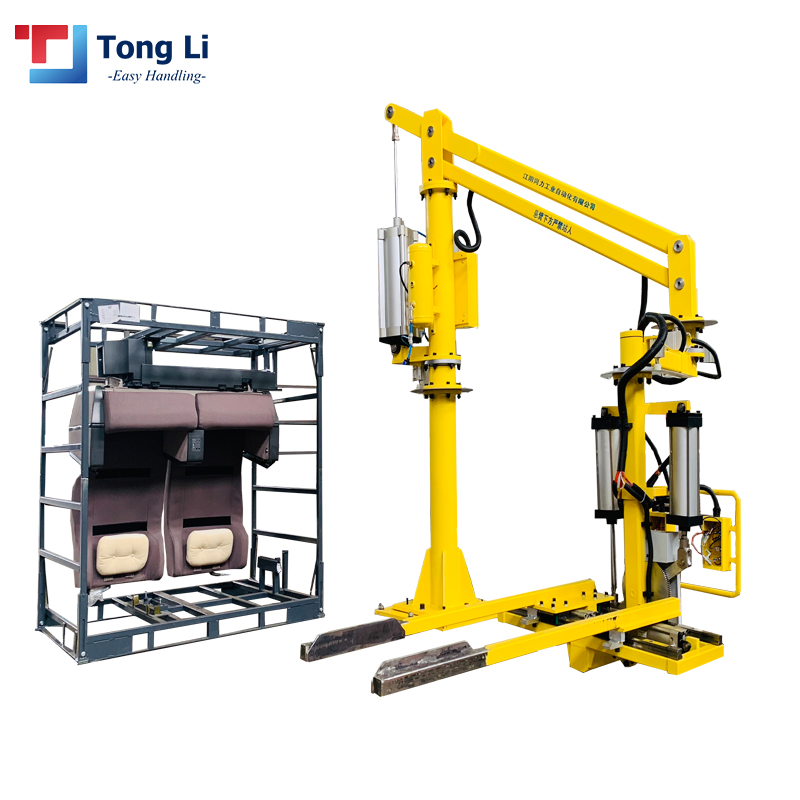
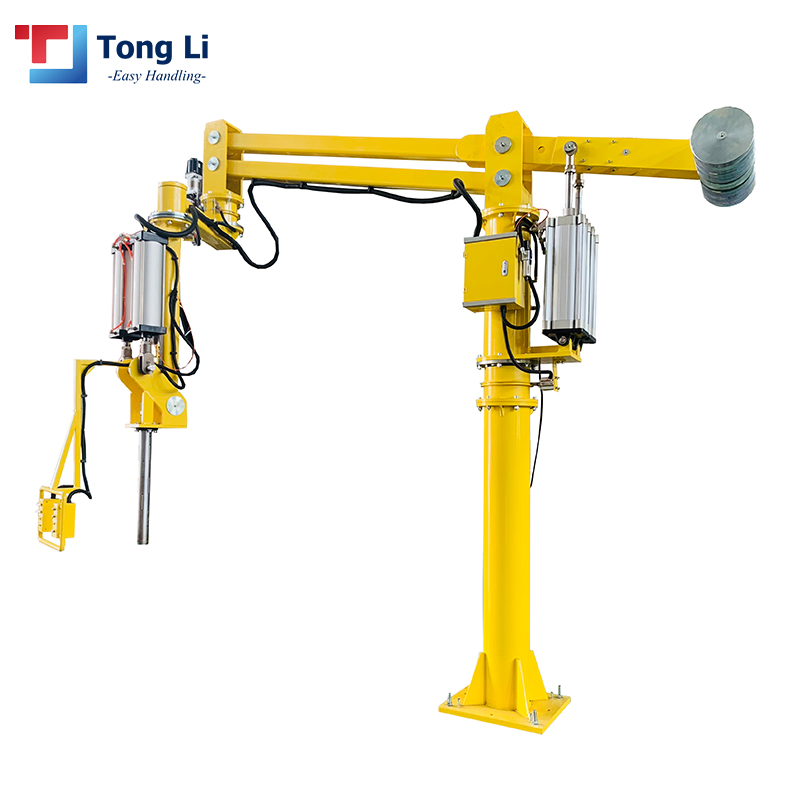
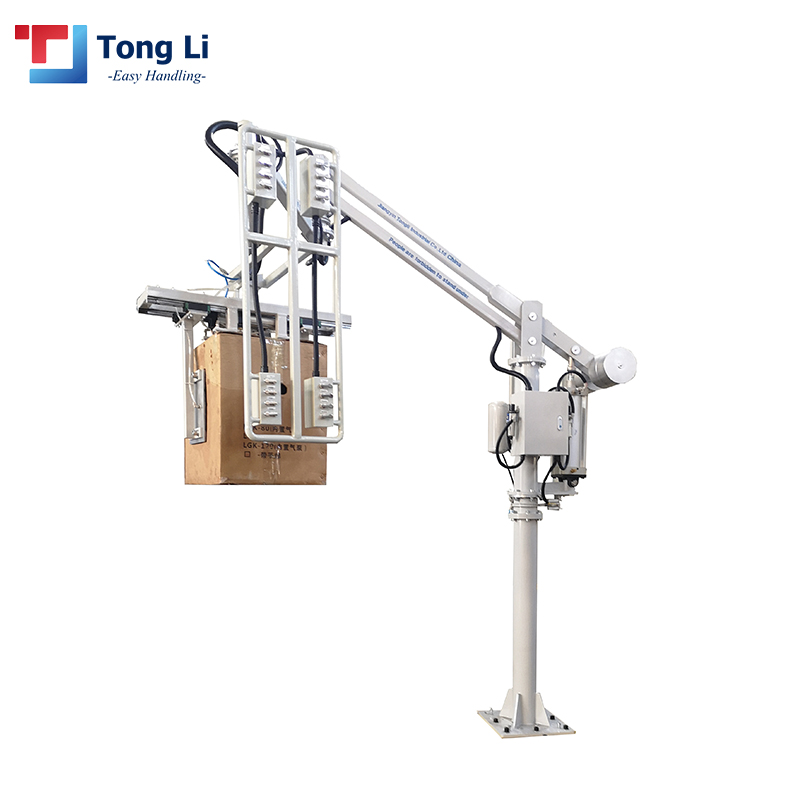
Fixed Column/Pillar: The vertical foundation, either bolted to the floor or mounted on a mobile base.
Cantilever (Rigid) Arm: A horizontal beam that extends from the column. Unlike cable-based lifters, this arm is rigid, allowing it to handle offset loads (items that aren’t directly underneath the arm).
Pneumatic Cylinder: The “muscle” that provides the lifting force.
End Effector (Gripper): The specialized tool at the end of the arm designed to grab specific items (e.g., vacuum cups for glass, mechanical clamps for drums, or magnets for steel).
Articulation Joints: Usually includes bearings that allow 360° rotation around the pillar and sometimes additional joints for horizontal reach.
3. Common Applications
Automotive: Loading engines, transmissions, or doors onto assembly lines.
Manufacturing: Feeding raw materials into CNC machines or removing finished parts.
Logistics: Palletizing heavy boxes or handling chemical drums.
Sanitary Environments: Stainless steel versions are used in food and pharmaceutical industries to move large vats or bags of ingredients